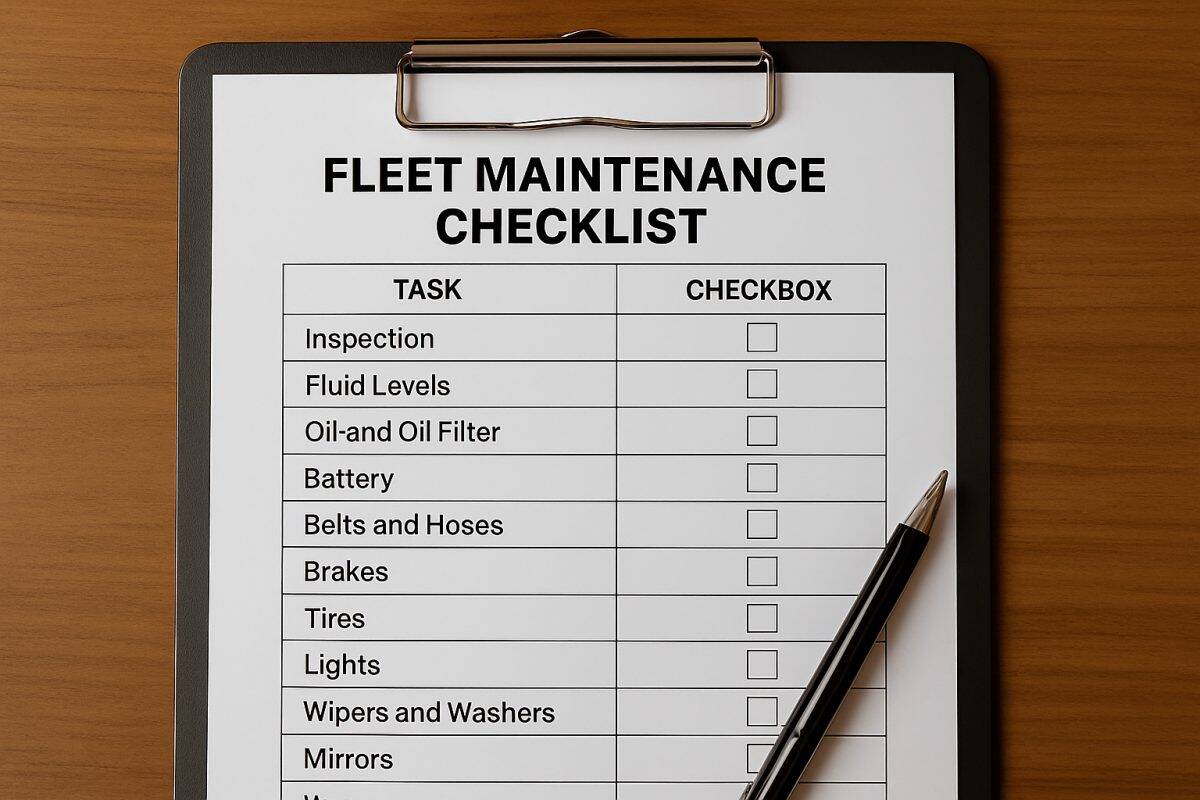
The Investment Decision Checklist: Before You Apply
Preparing a transport funding application for NZTA is not a matter of filling in a form — it is a structured case built on evidence, aligned to policy, and stress-tested against the same criteria an assessor will apply when it lands on their desk. This checklist is for council staff preparing their first business case, or their first in a while. It covers the three areas where proposals most reliably stall: strategic alignment, evidence quality, and deliverability. Get these right before you submit, and the process moves faster. Miss them, and the feedback loop is expensive.
Strategic Alignment: Does Your Proposal Fit the Programme?

Checking Against the GPS and RLTP
Every funding application to NZTA sits inside a hierarchy of planning documents, and the assessors will check alignment before they look at anything else. At the top is the Government Policy Statement on Land Transport (GPS), which sets the strategic direction and activity class priorities for three-year periods. Below that is the Regional Land Transport Plan (RLTP), which translates GPS priorities into regional programmes. Your proposal must be referenced to both.
That does not mean a one-line acknowledgement in the introduction. It means demonstrating, with specific references, that the problem your proposal addresses is one the GPS and RLTP have identified as a priority — and that the solution you are proposing is consistent with how those documents expect that problem to be approached. A proposal for a new rural road widening that cites GPS safety objectives but ignores the RLTP’s network optimisation focus will draw questions. So will one that references an outdated RLTP version.
Before you draft the strategic alignment section of your business case, download the current GPS from the Ministry of Transport and confirm which version of the RLTP is in effect with your regional council. Note the specific page references and outcome language you intend to use. If your proposal fits awkwardly — if it is clearly local in character but you are trying to frame it as a regional priority — flag that tension internally now rather than letting an assessor find it.
Problem Definition: Separating Symptoms from Causes
The single most common reason a first business case gets returned — before the assessor has even looked at the cost estimates — is a poorly framed problem statement. NZTA’s investment logic approach requires a clear articulation of the problem, not the symptom, and certainly not the solution dressed up as a problem.
A typical symptom-as-problem framing: “The intersection at [location] is dangerous.” That is a symptom. The problem might be inadequate visibility, inappropriate speed environment, poor pedestrian provision, or driver behaviour — and the solution differs substantially depending on which one it is. A proposal that skips past this diagnostic step and goes straight to “therefore we need a new traffic signal” has not established why a signal is the right response, or whether the signal addresses the underlying cause.
Write your problem statement in terms of what outcome the network is failing to achieve and for whom. Use the five-step investment logic map (ILM) process: identify the importance, the problems, the existing responses, the options, and the preferred solution. NZTA publishes ILM guidance and facilitates workshops for councils working through their first application — these are worth attending before you commit to a problem framing, not after. A well-facilitated ILM session with the right stakeholders in the room will surface the real problem and save you a revision cycle.
Mode Neutrality and Investment Logic
Mode neutrality is not a checkbox. It is a genuine analytical requirement that NZTA’s investment logic framework places on applicants — you must demonstrate that you have considered the full range of options for addressing the identified problem before concluding that a physical infrastructure response is the right answer.
In practice, this means your options assessment must include non-infrastructure alternatives: demand management, behavioural programmes, improved maintenance of existing assets, network management changes. You do not have to recommend them. You do have to show that you considered them seriously, evaluated them against the identified problem, and have a coherent reason for ruling them out. “Not feasible” is not sufficient. Neither is “community expectation is for a road.”
For councils preparing a first business case, the mode neutrality section is often the most unfamiliar. The temptation is to treat it as a compliance hurdle — list three alternatives, dismiss them quickly, proceed to the road solution. Assessors have seen this approach many times and it does not help your case. A stronger approach is to identify the one or two non-infrastructure options that genuinely come closest to addressing the problem, explain specifically why they fall short, and use that analysis to sharpen your argument for the proposed solution. The investment logic map output provides the natural structure for this: each option gets assessed against the same criteria, and the preferred option emerges from the analysis rather than being assumed from the start.
Evidence Requirements: What You Must Bring to the Table

Benefit-Cost Ratio Thresholds and What They Actually Mean
The benefit-cost ratio (BCR) is one of the most referenced numbers in a transport business case, and also one of the most misunderstood. A BCR above 1.0 means the quantified benefits exceed the costs over the appraisal period — typically 30 years for infrastructure projects. NZTA uses the BCR alongside other criteria, not as a pass/fail gate, but there are programme activity class thresholds below which a proposal needs very strong supporting arguments to proceed.
For standard improvement projects under the National Land Transport Programme, a BCR of 2.0 or above is generally expected before a proposal is considered competitive. Projects with BCRs between 1.0 and 2.0 can still be approved, but they require stronger evidence on non-quantified benefits — safety improvements not fully captured in crash cost models, resilience value, or strategic network function. Below 1.0, approvals are rare and require exceptional circumstances.
A high BCR does not guarantee approval. A proposal with a BCR of 4.5 built on shaky input assumptions — optimistic traffic growth, understated costs, cherry-picked unit benefit values — will draw more scrutiny, not less. The BCR calculation should use the parameters set out in the NZTA Economic Evaluation Manual consistently, and the sensitivity analysis should show the BCR at pessimistic input values. If the BCR falls below threshold under reasonable pessimistic assumptions, the assessors will find it. Better to present that honestly and address it than to present a headline number that unravels under questioning.
Traffic Data, Safety Records, and Baseline Evidence
NZTA operates on evidence. The baseline data in your business case needs to be current, sourced appropriately, and sufficient to support the problem statement you have made. The three most common data gaps that trigger requests for additional information are: incomplete crash history, outdated traffic volume data, and a missing network context picture.
Crash history should cover the most recent five years from the Crash Analysis System (CAS), accessed via the NZTA portal. If the site has had a recent low-crash period, include the ten-year history and explain the trend. Do not select a timeframe that flatters your case — assessors will check CAS themselves if the numbers seem thin. For proposals where safety is the primary justification, the crash data needs to be site-specific and supplemented with a description of near-miss incidents or community safety perceptions if official records understate the problem.
Traffic volume data should be sourced from recent counts, not assumed from old corridor studies. For rural roads, a single weekday count in average conditions is a minimum. For urban intersections, peak-period turning movement counts are expected. Traffic growth assumptions must be documented and justified — using a generic national growth rate on a rural road in a declining catchment will not survive scrutiny.
The network context section should describe how the affected link or intersection functions within the broader network: what does it connect, who uses it, and what alternatives exist. This is not padding — it is the evidence base for the benefit calculations.
Assessor Qualifications and Third-Party Sign-Off
Several elements of a transport business case carry formal qualification requirements. The economic evaluation — BCR calculation, EEM application — should be prepared or reviewed by someone with demonstrated transport economics experience. NZTA does not mandate specific credentials for every section, but the business case declaration requires the applicant to confirm the information is accurate and prepared competently.
For smaller councils, this is frequently the practical problem: the council engineer who understands the local network is not the same person who knows their way around the Economic Evaluation Manual, and the council may not have transport planning staff at all. The answer is usually a specialist consultant, but the selection matters. Membership of relevant professional bodies — such as Engineering New Zealand — is a reasonable indicator of base qualification, but the more useful signal is whether the consultant regularly prepares NZTA business cases. The assessors recognise familiar methodologies and familiar names.
Peer review is not formally required for smaller local improvement projects, but it adds credibility. For projects above roughly million, or where the BCR calculation is doing significant work in justifying the investment, an independent technical review of the economic evaluation is worth the cost. Some regional transport committees require it as a condition of including a project in the RLTP submission. Check your regional council’s requirements before you finalise the business case structure — discovering this requirement after the fact adds time and cost at the worst possible moment.
Why Proposals Come Back: The Most Common Rejection Triggers
Scope Creep and Cost Estimate Weakness
A business case with an inadequately bounded scope is one of the most reliable ways to invite an assessor’s red pen. Scope creep in this context means either including works that are not necessary to solve the identified problem, or defining the project boundaries so loosely that the cost estimate cannot be taken seriously. Both problems often appear together.
The cost estimate should be presented as a range — P50 and P90 estimates are standard practice — derived from a quantity take-off or unit rate schedule rather than a lump-sum figure from a project manager’s intuition. For projects at the Indicative Business Case stage, a cost estimate with a plus-or-minus 30 percent range is acceptable. For Detailed Business Cases, accuracy within 15 percent is expected, supported by design drawings at a sufficient level of detail. Presenting a P50 estimate without a range, or a P90 that is only 5 percent above P50, signals either inexperience or optimism bias — neither builds confidence.
The optimism bias uplift recommended in Treasury guidance is frequently omitted from first-time applications. The Better Business Cases framework, which NZTA’s investment decision process is aligned with, expects applicants to adjust reference class cost estimates upward to account for the systematic tendency of infrastructure projects to cost more than initially forecast. Councils that have delivered similar projects before can reference their own cost history. Those that have not should use the reference class statistics and explain the adjustment. Leaving this out does not make the problem disappear — it just shifts the risk onto the programme.
Missing Local Share Confirmation
NZTA does not fully fund transport projects. The local share — the portion of project costs that the council or approved organisation contributes from its own funding — must be confirmed before a proposal can be considered. In practice, this means a resolution from the council’s governing body, or at minimum a letter from the chief financial officer confirming that the funding is provided for in the Long Term Plan or Annual Plan.
What it does not mean is an email from the transport team saying they expect the council will support it. NZTA assessors have seen this before. An application without confirmed local share will be returned, because the programme cannot include a project that may not happen if the council later declines to fund its share.
The political dynamic here matters more than the paperwork. If the council has not actually debated and approved the project — if it is a staff initiative that has not gone through the full committee process — there is a risk that public and political scrutiny will arrive at the same time as the funding application. That rarely ends well. Councils that submit with genuine governing body endorsement, where elected members have understood the financial commitment and voted for it, are in a fundamentally stronger position than those where staff have assumed support. The confirmation paperwork is the evidence of a decision that should have happened months earlier.
Deliverability Red Flags
A business case that passes the strategic, economic, and financial tests can still be returned — or approved and then deferred — because of deliverability concerns. NZTA’s assessors are not just asking whether it is a good idea. They are asking whether the applicant can actually deliver it, on this timeline, with this budget.
The most common deliverability red flags are: land acquisition not commenced, resource consent not applied for, procurement strategy not described, and a construction timeline that does not account for seasonal constraints or supply chain realities. Any one of these will prompt questions. All four together, in a project claiming a 12-month delivery from approval, will sink the application.
Land acquisition is particularly sensitive. If the project requires land that the council does not own, the business case should describe the acquisition approach, timeline, and — critically — whether the landowner is aware of and cooperative with the proposal. A project that requires compulsory acquisition under the Public Works Act should say so explicitly, with a realistic timeline that accounts for the statutory process.
On procurement capability: councils that have not recently delivered a capital project of comparable complexity should address this directly. Options include joint procurement with another council, engaging a project management contractor, or partnering with a Crown entity with delivery experience. Ignoring the question does not reassure the assessor — acknowledging it and describing the mitigation does.
The NZTA investment decision process is demanding by design — the National Land Transport Programme allocates around $4 billion a year, and every dollar committed to one project is unavailable to another. A proposal that is well-prepared, honestly scoped, and aligned to current policy priorities is not just more likely to be approved; it is more likely to be approved without a revision cycle that adds months to the timeline. The checklist above is not a formula. It is a prompt to ask the hard questions before the assessor does.
2 Comments
The point about problem definition is the one I wish someone had made to us before we submitted our first application. We spent three months on a business case for a footpath extension that kept getting sent back because our problem statement was essentially ‘the footpath is in bad condition’ — which is a maintenance issue, not a transport problem. Eventually an NZTA planner explained that we needed to frame it around pedestrian connectivity and safe route provision to the school. Same physical works, completely different framing, approved first time after the revision. Would have been useful to know that upfront rather than after two failed attempts.
The section on local share confirmation is worth emphasising for anyone working in a smaller council. We had a project where the transport team had verbal support from the mayor and assumed that was sufficient. By the time the governance paperwork caught up — proper committee resolution, CFO sign-off — we had missed the RLTP submission window by six weeks. The project went into the next three-year programme instead. The lesson was that political support and formal council resolution are two different things, and the submission timeline needs to work backward from the LTP cycle, not just the NZTA deadline.