Emergency Works: How New Zealand Pays to Put a Road Back
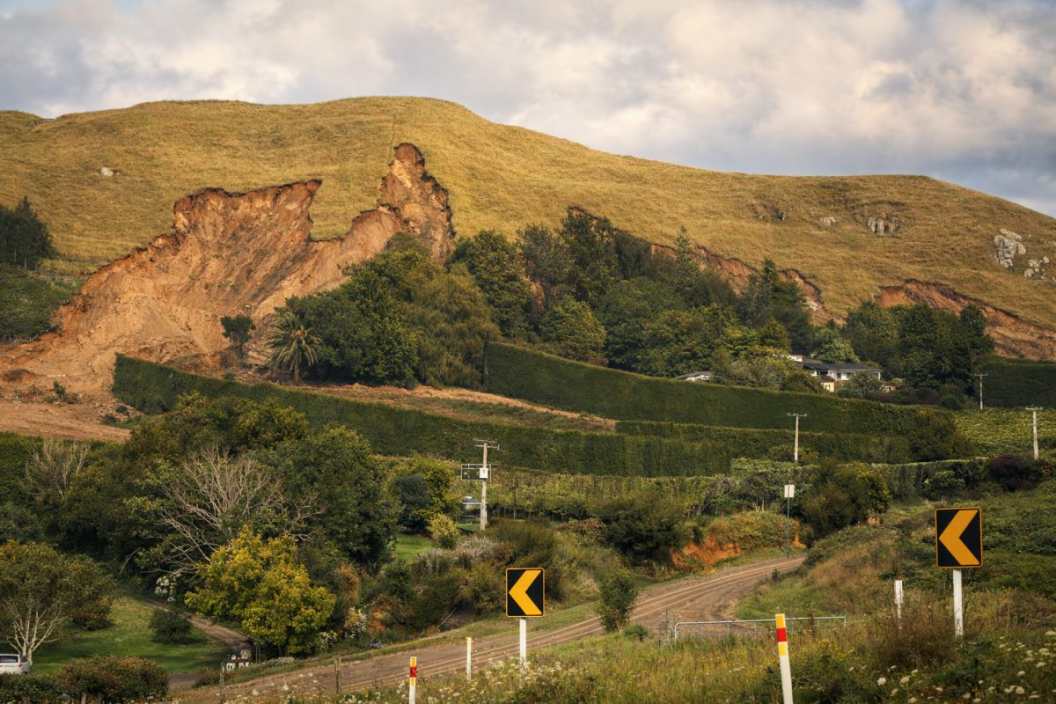
A slip takes out two hundred metres of a coastal highway on a Tuesday night. By Thursday the diggers are working, and somewhere in a council office an asset manager is already deciding which budget line pays for them. Emergency works is one of the few parts of New Zealand’s transport funding system that moves at the speed of the problem – and one of the most widely misread, because the money that reopens a road and the money that improves it come from entirely different places.
The Category That Exists Because Roads Break
What Qualifies as an Emergency
Not every washout is an emergency in the funding sense. The emergency works category sits inside the National Land Transport Programme, the three-year investment plan built from the National Land Transport Fund – the pooled revenue from fuel excise, road user charges and vehicle registration that pays for most of the network.
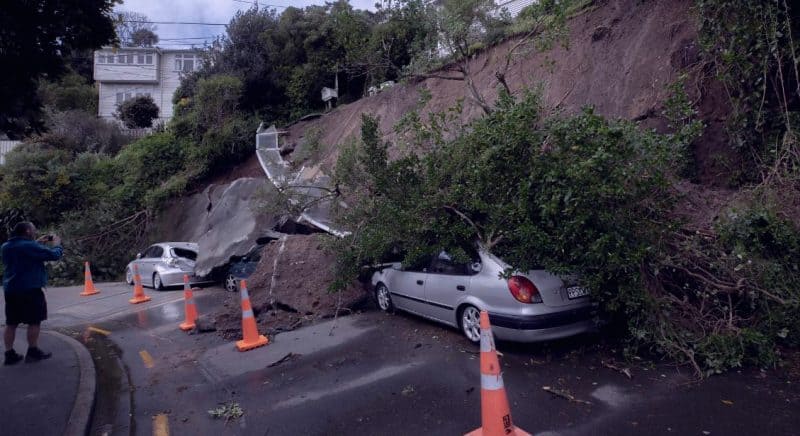
Its definition is narrow. The damage has to come from a sudden, unforeseen natural event or accident rather than gradual deterioration, and it has to hit an existing asset on the network of a road controlling authority – across most of the country, a district or city council.
The repair bill also has to clear a financial threshold scaled to the size of that authority’s normal maintenance programme. That last test is why the same slip can be a formal emergency in Wairoa and a bad week in Auckland.
The Threshold a Council Wears Itself
The threshold behaves like the deductible on an insurance policy. Damage below it is not rejected – it simply stays inside the council’s ordinary maintenance and renewals budget, which was set months earlier on the assumption of an unremarkable year.
The design logic is sound. Without a floor, every blocked culvert and dropped shoulder would arrive as a claim, and the cost of processing them would outrun the cost of fixing them.
The consequence is less comfortable. Because the threshold scales with programme size, a small council with a long network and a thin rating base can absorb a genuinely damaging event without ever crossing into emergency territory, then find its renewals programme quietly hollowed out for the rest of the year.
Getting the Claim Recognised
Recognition is a process, not a phone call. The authority notifies NZTA, the New Zealand Transport Agency that administers the fund, early – usually while the event is still unfolding – because a claim assembled afterwards is a claim built on memory.
What follows is evidence. Photographs taken before the excavator moves, dated inspection records, and cost breakdowns that separate one damage site from another rather than lumping a district into a single number.
Investment advisers work through that material with the council rather than against it, but the paperwork carries real money. An event logged as routine maintenance at the time is difficult to reclassify once the road is open and the trucks are rolling again.
Response First, Reinstatement Later
The First Week Is a Different Budget
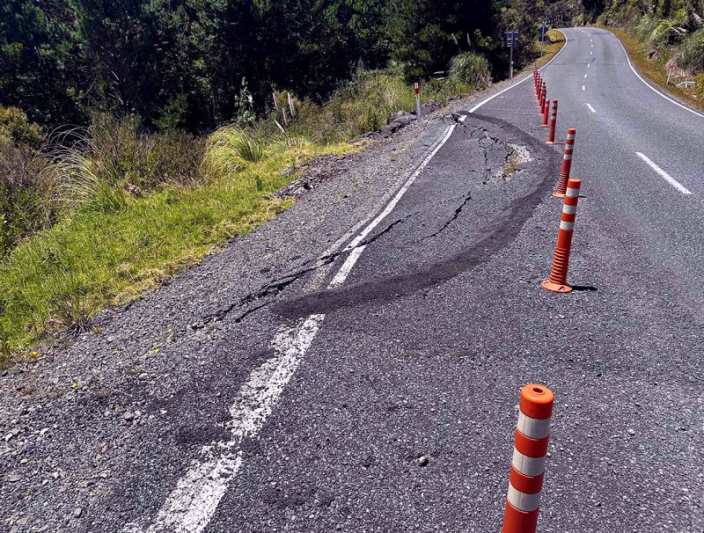
Emergency works splits into two activities that behave nothing alike. Response covers everything done to make a site safe and get traffic moving again:
– clearing a slip face and benching the batter above it
– propping or armouring a scoured bridge abutment
– signing, lighting and staffing a detour
– dropping in a temporary single-lane structure
– inspecting ground that nobody can reach on foot
Response spending is authorised quickly and reconciled afterwards, which is the right way round – no crew should be waiting on a funding approval while a hillside is still moving.
It is also the phase where costs run hardest to predict. A single-lane detour held under traffic management for six weeks can cost more than the permanent repair that eventually replaces it.
Where Response Ends and Reinstatement Begins
The boundary between the two is a condition rather than a date. It is the point at which the immediate hazard is under control and the road is carrying traffic again, however awkwardly. From there, spending moves into reinstatement: the permanent repair that returns the asset to service.
Reinstatement is designed, priced and scrutinised in a way response never is, and it can sit in the programme for years while geotechnical investigation works out whether the slope will hold a road at all. Plenty of New Zealand routes have run on a response-phase arrangement long enough that locals have stopped calling it temporary.
Why the Split Shapes What Gets Built
Because the two phases carry different levels of scrutiny, they push toward different engineering. Response rewards speed and reversibility – the bailey bridge, the benched slip, the single lane held behind a gabion wall. Nothing in that phase asks whether the fix is the best long-term answer, because the question on the table is whether the road is open.
Reinstatement then inherits whatever response left behind. If the temporary arrangement works well enough, the pressure to fund a permanent replacement drains away, and the route joins a long list of assets running below the standard they were built to. The urgency that unlocks the money is also what limits how far it reaches.
The Uplift: How the Cost Share Moves
Normal Share, Emergency Share
Every council pays a share of the cost of its own network and the fund pays the rest. That split is the funding assistance rate, or FAR, set for each authority through a national framework that weighs rating base, network size and ability to pay. A wealthy urban council carries more of its own cost; a large, sparsely populated district carries less.
Emergency works does not run on that everyday rate. Once an event clears the qualifying threshold, the qualifying spend attracts an enhanced rate – a lift above the council’s normal share, applied to the emergency work alone.
The size of that uplift and the conditions attached to it are set through the agency’s funding assistance rate policy and reviewed periodically, so the published figures move even when the mechanism does not. The principle behind it is straightforward: a district should not be penalised by its own geography.
When the Fund Itself Runs Short
An uplifted rate still assumes the fund can absorb the bill. Occasionally it cannot. When a single event does damage measured in billions – the 2023 North Island events are the reference case now – the emergency works category is too small a vessel, and topping it up from inside the fund would mean cancelling other regions’ programmes to pay for one region’s recovery.
At that point the decision leaves the transport system altogether and becomes a Crown funding decision, taken by Cabinet outside the National Land Transport Fund. That is a better outcome than cannibalising the national programme, but it reintroduces exactly what the FAR framework was built to remove: a cost share negotiated politically rather than calculated, on a timetable set by the appropriations cycle.
Reinstatement or Betterment: The Line That Decides the Road
Reinstatement Means the Road You Had
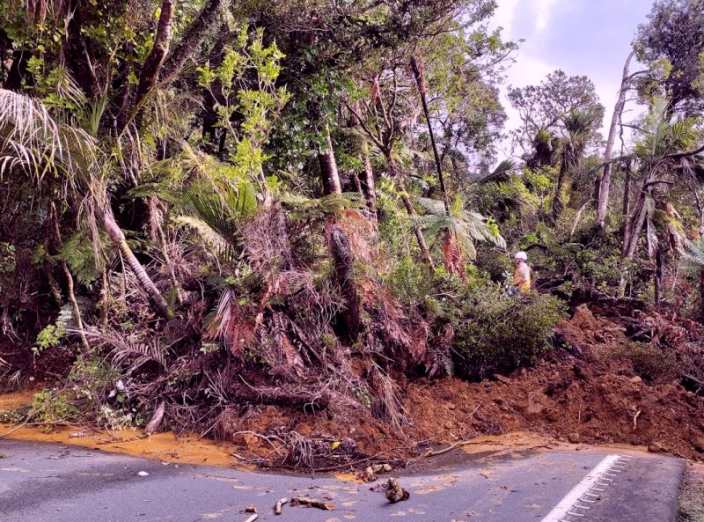
The test applied to emergency reinstatement is restoration to the level of service that existed the day before the event. Same alignment, same lane configuration, same design standard, same capacity. If a one-lane timber bridge washes out, emergency works funds a one-lane bridge.
This is not bureaucratic stubbornness. The category exists to restore what the fund had already invested in, and the cost share is generous precisely because the scope is tightly bounded. Loosen the definition and emergency works becomes a route by which any council with a slip can fund an upgrade it could not otherwise justify – which is a fair description of the pressure the boundary is there to hold back.
Betterment Has to Queue Somewhere Else
Anything above the pre-event standard is betterment: a wider carriageway, a realignment away from the toe of the slope, a two-lane replacement for a one-lane structure, a culvert sized for a rainfall event the original never contemplated. Betterment is not forbidden. It is funded through a different door.
That door is the normal improvement pathway, where a proposal is assessed for strategic fit and benefit-cost performance, ranked against every other improvement in the country, and slotted into a three-year programme. The machinery is thorough and slow, and it was never designed to answer a question posed by a hillside that moved last Thursday. A council that wants the better road funds the difference itself, or waits.
The Same Slip, Three Times
The structural result is that the cheapest thing to fund is the thing most likely to fail again. Like-for-like reinstatement attracts an uplifted share and moves at speed. The version that would not need rebuilding attracts an ordinary share and moves at the pace of a national prioritisation cycle.
Faced with a road that has to reopen, councils take the fast door. The network then accumulates repairs built to a standard it has already outgrown, and the same slip gets paid for two or three times across a couple of decades.
Some of this is being chipped away at the margins – resilience-specific funding lines, and provisions that allow a measured degree of betterment where rebuilding the same asset is demonstrably uneconomic. The underlying asymmetry holds. Building it back the same is a claim. Building it back better is a business case.
There is a version of this system in which the money that reopens a road and the money that improves it are the same money, and the engineers make one decision instead of two. New Zealand does not have that system, and the reasons are defensible – a bounded scope is what makes a generous cost share affordable at all. But every washout still puts a council in front of the same fork: a road that opens next month, or a road that lasts. The funding rules have already made one of those look far easier than the other.