The Rock Underneath: Aggregate Standards and New Zealand’s Quarry Problem
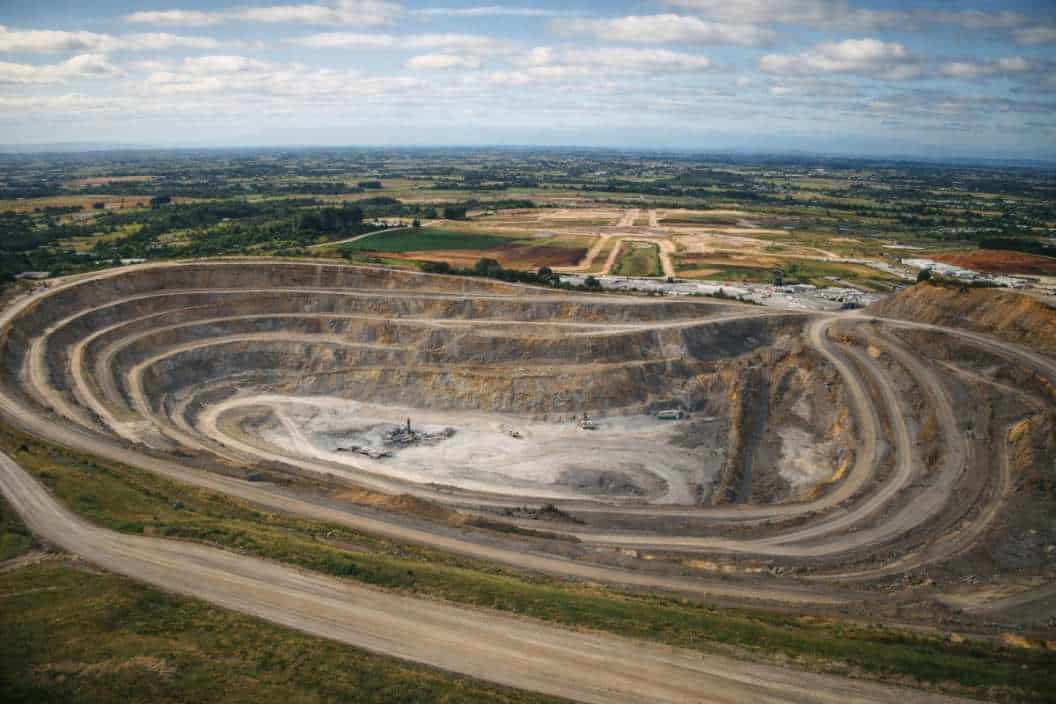
Every sealed road in New Zealand is, underneath the black surface, a carefully graded pile of broken rock. The specifications governing that rock run to a few pages and a few dozen test numbers, and they quietly decide how long the pavement lasts and what it costs to keep.
They also decide something less obvious. Which region gets a good road turns as much on where the nearest compliant quarry sits as on anything argued over in a funding round.
What the Specification Actually Asks For
The Grading Envelope Is the Whole Argument
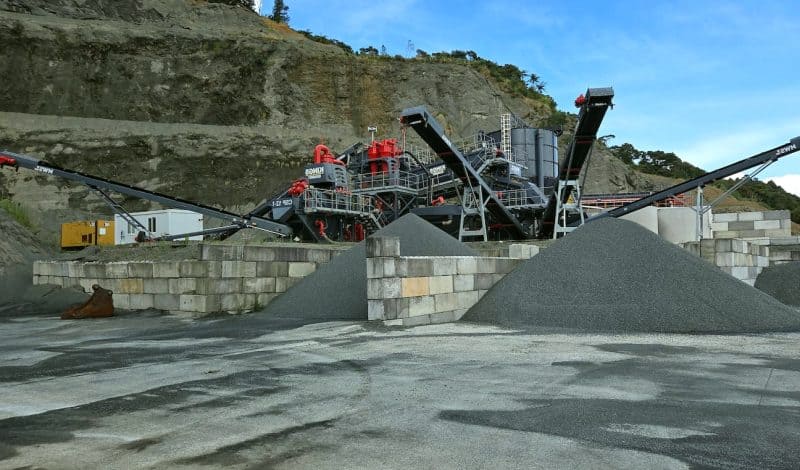
A basecourse specification does not describe a rock. It describes a distribution. TNZ M/4 – the New Zealand Transport Agency specification for crushed basecourse aggregate, still the reference most councils write into their contracts – sets a grading envelope: upper and lower bounds on the percentage of material passing each sieve, from 37.5mm down to the 0.075mm fines.
AP40, the label on the docket, simply means all passing 40mm. The envelope underneath that headline is where the engineering sits.
Get the distribution right and the particles nest, the voids fill, and the roller locks the layer into something close to weak concrete. Too coarse and nothing fills the gaps, so it never properly compacts. Too fine and you have built a road on stiff soil.
Crushing Resistance and the Load That Never Stops
Interlock only holds if the particles survive being loaded. The crushing resistance test in NZS 4407, the standard that defines how aggregate is sampled and tested in New Zealand, presses a confined sample until a tenth of it breaks down to fines, and M/4 will not accept a source that gives way below 130 kN.
The number sounds arbitrary until you count the loading. One heavy vehicle axle does almost nothing. Several million of them, over twenty years, with water in the layer and a truck fleet that keeps getting heavier, will grind a soft aggregate into its own filler.
Once the coarse skeleton has crushed itself to fines, the layer stops carrying load through grain contact and starts carrying it the way clay does.
Cleanness, or Why Fines Are the Enemy
The fines that matter most are the ones that were never rock. Clay and silt arriving with the aggregate, whether off a weathered face or out of a carelessly sited stockpile, coat the particles and stop them touching properly.
M/4 controls this with a clay index and a plasticity limit on the fine fraction, and the sand equivalent test gives a contractor a fast read on whether the load in front of them is clean enough to lay.
The consequence of getting it wrong shows up in the first wet winter. Water gets into a dirty basecourse, the clay swells, the layer loses stiffness, and traffic pumps the slurry up through cracks in the seal. A rural road that develops a rash of shoving and edge break after a wet August has usually suffered a cleanness failure, not a design failure.
Particle Shape, and the Case Against Round Rock
Shape is the third leg, and it is why a river gravel and a quarried rock of identical strength are not interchangeable. Rounded alluvial stone rolls. Crushed rock, with fractured faces on most of its particles, wedges.
M/4 asks for a broken face count precisely because angularity is what generates shear strength in an unbound layer. There is no cement holding a basecourse together, only friction and geometry.
The same logic runs the other way for sealing chip, where flat and elongated particles are the problem. A flaky chip lies down flat, drowns in binder and surrenders its texture within a couple of summers. Shape decides how a layer behaves long after the paperwork is filed.
Why Greywacke Runs the North Island
A Geology That Happened to Suit Us
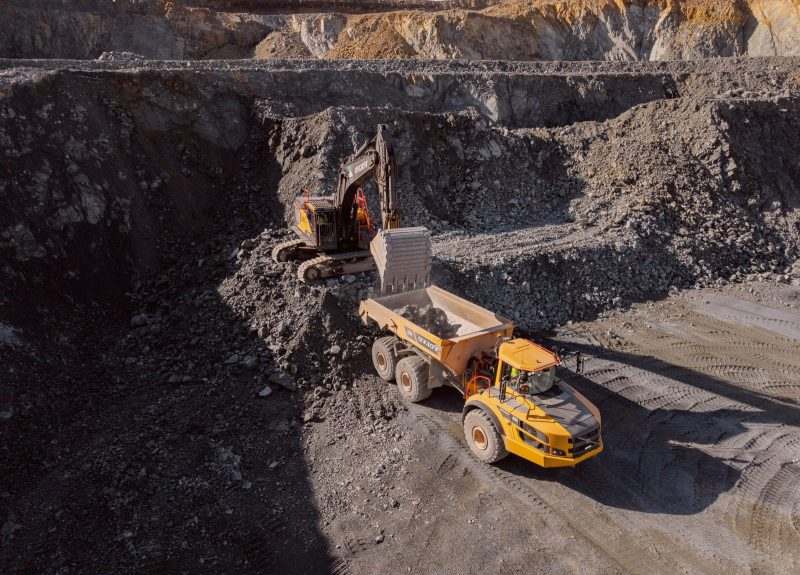
Nothing about greywacke was designed for roading, which is the fortunate part. The hard, indurated sandstone of the Torlesse and Waipapa terranes forms the spine of both islands – the Kaimai, Ruahine and Tararua ranges, south into the Southern Alps – and it arrives with nearly everything M/4 asks for. It is strong, it fractures angular, it weathers slowly, and there is a great deal of it.
North Island supply runs on it because the working quarry belts sit where the demand is. The greywacke basement rock surfaces in the Hunua Ranges south of Auckland, along the Kaimai flank and through the Wairarapa, close to the markets and the state highways that have to be fed. A geological accident set the default pavement material for half the country.
Sealing Chip Grades and the Numbers That Matter
Chip is specified differently, and the number that matters is not the sieve size. The Transport Agency’s M/6 specification sets grades from 2 through to 6, coarsest to finest, but a chip seal is designed around average least dimension – ALD, the mean of each particle’s smallest measurement – because that is what decides how deep the chip beds and how much bitumen is needed to hold it without flushing.
Grade selection is really a traffic argument. Heavy, fast state highway traffic takes a coarser grade that will not be plucked out or crushed under braking; a quiet residential street takes a finer one that is quieter under tyres and less brutal on windscreens. A two coat seal often pairs a coarse grade underneath with a finer one over the top.
Because the binder rate is calculated from ALD, a chip that passes its grading but carries a poor shape distribution can still wreck a sound seal design.
Where the Rock Is Not Greywacke
Outside the greywacke belts the picture fragments. Northland works with volcanic rock and weathered sedimentaries that need careful selection. Taranaki, the central plateau and parts of the Bay of Plenty draw on andesite and basalt, which can be excellent and can also be vesicular enough to fail crushing resistance outright. Auckland’s basalt fields hold strong rock in pockets that are largely built over.
The South Island leans hard on alluvial gravels off the Canterbury and Southland plains. They are abundant but rounded, so the crushing stage has to manufacture the angularity a hard rock quarry gets for nothing. Otago and Southland schist splits along its foliation and tends toward flaky material.
None of that disqualifies a region. It means the cost of reaching specification is not evenly distributed across the country.
The Testing Regime Behind the Certificate
A specification is only worth the testing behind it. Source rock is characterised once and thoroughly – weathering quality index, crushing resistance, cleanness – and that testing describes a face, not a stockpile. Production compliance testing then runs at a frequency tied to tonnage, checking grading and cleanness on the material actually leaving the gate.
The gap between those two things is where most disputes live. Quarry faces change as they are worked. A source that tested well can drift as the operation moves into a more weathered zone, and the compliance regime is the only thing standing between that drift and ten thousand tonnes of marginal basecourse sitting under a fresh seal. Engineers who have been caught once test rather more than the minimum.
The Quarry Problem: Distance, Consent and the Cost Ceiling
Haul Distance Is the Hidden Line Item
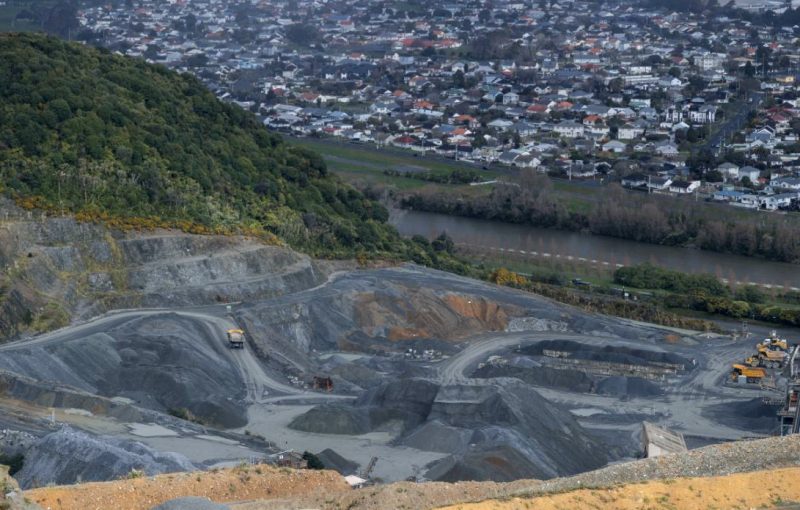
Aggregate is cheap and heavy, which is the entire problem. The rock itself is a modest cost at the quarry gate. Cartage is charged by the tonne-kilometre, and at typical rates the delivered cost roughly doubles somewhere between 50 and 100 kilometres out, depending on truck configuration and how much of the run is winding rural highway.
Past that point the material stops being an input cost and becomes a project constraint. Metalling a rural road 120 kilometres from the nearest compliant source is a different financial exercise from the same work 15 kilometres away, and the gap is not marginal.
It also loads the network in a way nobody budgets for. Every tonne of aggregate arrives on the same roads it was bought to fix.
Consenting a Quarry Takes Longer Than Building the Road
The obvious answer, open a quarry closer, runs straight into the second constraint. A new hard rock operation needs:
– land use consent for the excavation itself
– discharge consents for dust and stormwater, and usually a water take
– conditions covering blasting, noise, operating hours and truck movements
The technical work is manageable. The process is not. Applications for significant new quarries routinely run to years, and appeals can push a greenfield operation past a decade between first drilling and first product.
Reverse sensitivity does much of the damage. Rural land sitting over a good rock resource gets subdivided into lifestyle blocks, and the new neighbours are entirely reasonable in not wanting blasting over the fence. The rock did not move. The people did.
Regions That Run Out of Options
The squeeze is invisible until it is acute. A district served for forty years by one or two quarries reaches the point where the consented resource is running down, the extension is contested, and the nearest alternative sits over a range.
Tairawhiti, the West Coast and parts of Northland already work from a thin supply base. After a major weather event the demand curve goes vertical while the supply base stays precisely where it was.
That is the point at which councils start placing local material that would not pass M/4 on a good day. The honest framing is not compliant aggregate versus marginal aggregate. It is marginal aggregate versus no road.
What a Constrained Supply Actually Does to a Road
Downstream, a supply constraint stops looking like a materials problem and starts looking like a maintenance problem. Marginal basecourse degrades faster, so a reseal cycle shortens from twelve years to eight. Expensive chip means thinner applications and more single coat work where a two coat seal was warranted.
Each of those calls is defensible on its own and ruinous in aggregate, because the pavement now consumes maintenance money it was never designed to need – money that came out of the allocation meant to fund the next renewal.
Ratepayers experience the whole chain as potholes and a road that never quite comes right. The actual cause was settled years earlier, in a consent hearing or a haul rate, long before anyone put a truck on it.
None of this makes it into the transport funding debate, which prefers to argue about projects. But the quality ceiling on a region’s roads was set first by its geology and then lowered by its consenting history, and no amount of investment shifts a quarry closer to the work.
The rock underneath decides more than the budget above it.
2 Comments
Good to see someone explain ALD properly instead of just quoting a grade number. Half the flushing complaints that come back to us trace to a seal designed off nominal size. The bit about faces drifting is real too – we had a zone go from clean to marginal over about eighteen months of working into it, and the compliance testing was the only thing that picked it up before it went out.
The reseal cycle point is the one that never lands with elected members. Twelve years to eight sounds like nothing until you put it through a 30 year model. Has anyone actually published haul distance thresholds by district? Would save me a lot of arguing in business cases.