Temporary Traffic Management: The Cones, the Crews and the Rules
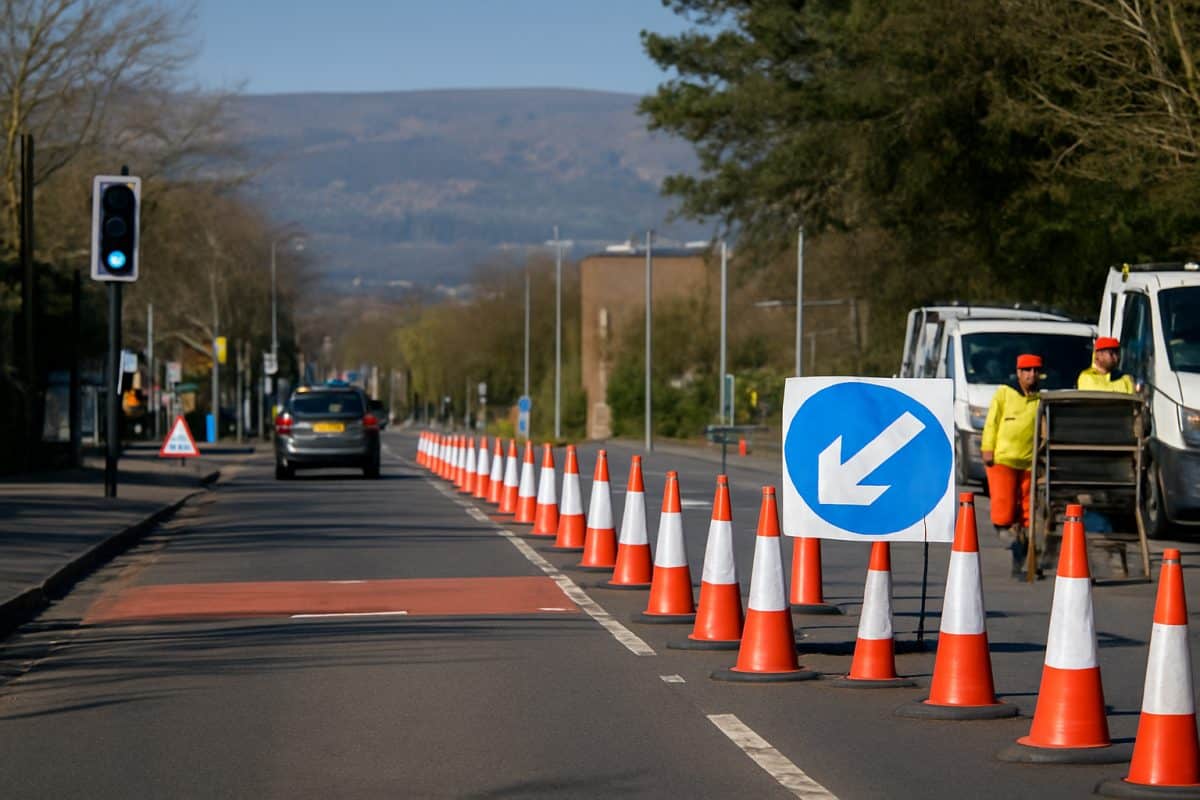
Few things unite New Zealand drivers like a grumble about road cones. We crawl past empty-looking worksites, resent the speed limit that lingers after the crew has gone, and rarely ask why any of it is laid out the way it is. Behind the orange plastic, though, sits a whole discipline — with its own rules, qualifications and a real body count it exists to prevent. Here is what the cones are actually doing.
Why a Lane of Cones Appears
What Temporary Traffic Management Actually Is
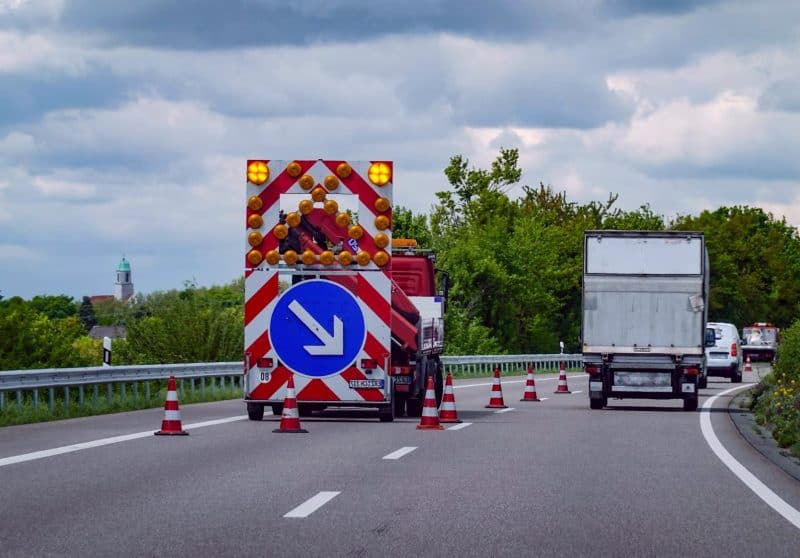
Every set of road cones is a small, temporary law. Temporary traffic management — TTM in the trade — is the system of signs, cones, barriers, lane shifts and reduced speed limits that lets work happen on or beside a live road without someone being killed for the privilege. It covers everything from a half-day pothole patch to a multi-month motorway widening. The principle is simple even when the layout is not: separate moving traffic from working people, and give drivers enough warning to adjust before they reach the hazard. When TTM is done well you barely notice it beyond a slower trip. When it is done badly, a worker dies or a driver hits a truck parked across a lane at open-road speed. The cones are not there to annoy you. They are there because the alternative has a body count, and the sector has the statistics to prove it.
The Worker Behind the Sign
It is easy to forget that the person holding the stop-go sign is standing a metre from vehicles travelling at speeds that turn a moment of inattention into a fatality. Road workers are among the most exposed people in the country, sharing their workplace with distracted, tired and occasionally hostile drivers. That exposure is exactly why TTM is treated as a health-and-safety obligation rather than a courtesy. Under the Health and Safety at Work Act, the organisation doing the work and the one controlling the road both carry duties to keep workers safe, and WorkSafe New Zealand can and does investigate when a worksite incident hurts someone. The layout you drive through is, in legal terms, a workplace — and the speed limit drop is part of keeping it one people walk home from.
Reading a Worksite: Taper, Buffer, Work Area
The Taper That Moves You Over
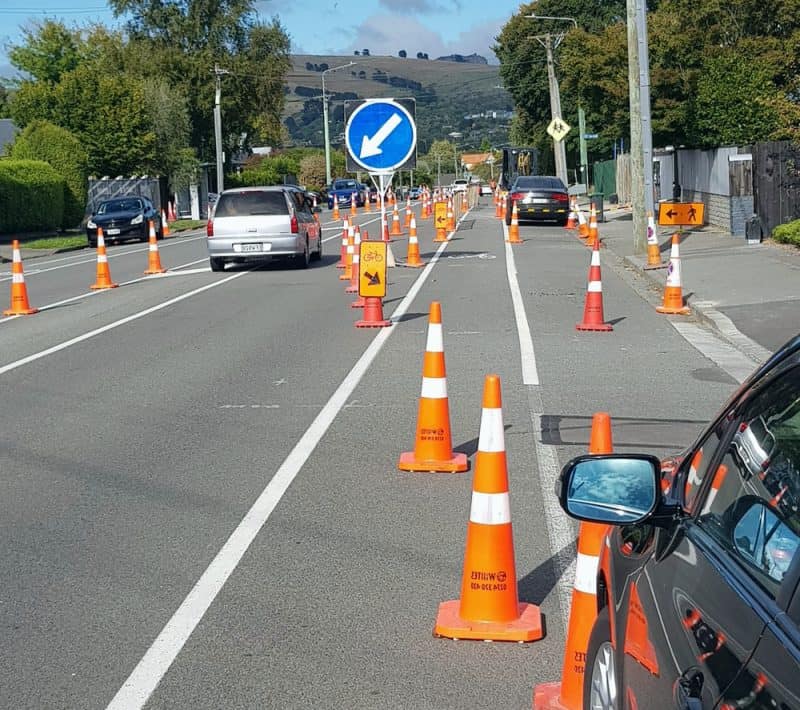
The line of cones that guides you out of a closing lane is called the taper, and its length is not arbitrary. It is calculated from the speed of the road, because the faster you are going the more distance you need to change lanes smoothly without braking hard or swerving. A taper that is too short forces a panic merge; one set out properly feels like the road simply nudged you across. The cones are spaced and angled to be read at speed, at night, in rain — which is why they are reflective and why knocking them flying is a genuine hazard rather than a bit of fun. The taper is the most visible part of any worksite and the part drivers most often clip, usually because they left the lane change until the last possible second.
The Buffer Nobody Notices
Just past the taper, before you reach anyone actually working, there is usually a stretch of coned-off but empty road. Drivers see it as wasted space and proof that the worksite is bigger than it needs to be. It is called the buffer, and it is doing the most important job on the site: it is the crumple zone. If a vehicle fails to slow or drifts off line, the buffer gives it room to stop or be redirected before it reaches the crew. Removing it to make the closure look more efficient would simply move the point of impact onto people. The empty space is not an oversight. It is the margin between a near miss and a funeral, and it is one of the first things an auditor checks.
Why the Speed Limit Drops
Temporary speed limits are the single most resented feature of any worksite, especially when they stay in place after the crew has gone home. They exist because stopping distance climbs sharply with speed, and a worksite removes the forgiving margins a normal road offers — there is less room, unexpected movements, and people on foot. A lower limit buys reaction time for everyone. The fair criticism is real: limits that linger over weekends, or 30 km/h signs on a site with no visible activity, erode the goodwill that makes drivers comply in the first place. The sector knows this, and over-use of low limits is one of the behaviours the newer rules are explicitly trying to curb.
From CoPTTM to NZGTTM: A Rulebook in Transition
The CoPTTM Era
For two decades, temporary traffic management in New Zealand ran on the CoPTTM — the Code of Practice for Temporary Traffic Management. It was prescriptive by design: it told you, in detail, exactly how many cones, what taper length, which signs and what spacing applied to a given road and speed. That precision made it easy to audit and easy to train to, and it brought real consistency to worksites nationwide. Its weakness was the flip side of its strength. A rulebook that specifies one answer for every situation tends to be applied by rote, which produces sites that are technically compliant but not actually matched to their risk — full cone layouts for trivial jobs, and the same template whether the road carried ten vehicles an hour or ten thousand.
The Shift to Risk-Based NZGTTM
The replacement is the NZGTTM — the New Zealand Guide to Temporary Traffic Management — and it marks a genuine philosophical change. Instead of prescribing a fixed layout, it asks the people setting up a site to assess the actual risk and design a response proportionate to it, a model already used across other high-hazard industries. Done well, that means lighter touch on low-risk jobs and more thought on genuinely dangerous ones. Done badly, it shifts responsibility onto site staff without giving them the competence to carry it. The transition has been gradual and not without friction, and the detail sits with the guide on the NZTA website. Whether it delivers smarter sites or just different paperwork depends entirely on the training that goes with it.
Who Plans the Cones
The Traffic Management Plan
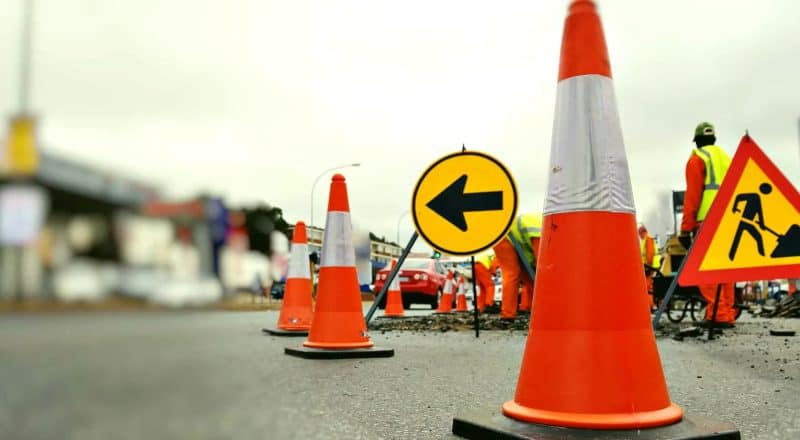
No legitimate worksite goes in on a hunch. Before the first cone is placed, someone prepares a Traffic Management Plan — a TMP — that sets out the layout, the speed limits, the signage, the hours and the contingencies for the specific site. On the ground, a qualified Site Traffic Management Supervisor (an STMS) is responsible for installing it correctly, adjusting it as conditions change, and shutting it down if it becomes unsafe. This is skilled work dressed in a hi-vis vest. The person you assume is standing around is often the one legally accountable for everyone else’s safety, monitoring sight lines, traffic behaviour and weather while the visible work happens behind them.
Approval, Audit and the Road Controlling Authority
A TMP does not authorise itself. It is approved by the Road Controlling Authority — the RCA — which is the organisation responsible for that particular road: NZTA for state highways, the local council for local roads. The same authority, or its auditors, can turn up unannounced to check the site matches the plan and meets the standard, with the power to order fixes or shut the job down. This is the systemic point worth holding onto: the cones in front of you are the visible end of a chain that runs back through a supervisor, a plan, an approving authority and a body of national rules. It is bureaucratic, and it is also why most New Zealanders have never had to think about it.
The Frustrations, and What They Get Wrong
Why Is No One Working?
The most common complaint about any worksite is that you crawl through it and see nobody lifting a finger. Sometimes that is a fair hit. Often it is not. Crews work in stages — excavation, then a wait while a layer cures or a delivery arrives, then surfacing — and the traffic layout has to stay up across the whole sequence because taking it down and reinstalling it for each stage is both slower and more dangerous than leaving it. Night work, weather stand-downs and staged closures all produce stretches where the road is coned but quiet. The honest answer is that the cones protect a process, not just a person with a shovel, and the process has gaps the public never sees.
When TTM Goes Too Far
None of this means every worksite is beyond criticism, and pretending otherwise would be its own kind of dishonesty. Over-coning, speed limits left running long after a job is done, closures sized for the contractor’s convenience rather than the risk — these are real, and they are exactly the behaviours that turn reasonable drivers into cone-flattening cynics. The cost is not just irritation: every unnecessary closure burns money, time and public patience that the genuinely necessary ones depend on. The shift to risk-based management is, in part, an admission that the old approach sometimes produced theatre rather than safety. The test of the new system will be whether the cones in front of you ever start to feel proportionate to the danger they are guarding against.
Temporary traffic management is the rare piece of public infrastructure designed to be invisible when it works and infuriating when you have to think about it. The cones, the buffer, the dropped speed limit and the supervisor in the hi-vis vest are all parts of a system built to get road workers home alive. It is fair to demand that system be proportionate — and fair, too, to remember what it is standing between.
3 Comments
STMS here. Every time someone says ‘no one was working’ — the gap is usually because we’re waiting on a delivery truck, or the cure time on a seal, or because pulling the whole layout down and resetting it for a 20-minute job is more dangerous than leaving it up. The cones aren’t free and we don’t put them out for fun.
The speed limit that lingers after the crew’s gone is my pet hate. NZGTTM is meant to be risk-based now — so when the risk has left the site with the crew, drop the TTM. Half-finished sign removal just makes everyone trust the next worksite less.
Didn’t know the buffer space was deliberate — always thought it was wasted road. Makes sense that it’s there to catch the car that misjudges the taper rather than the worker. Changes how I read a worksite.