Rumble Strips, Raised Crossings and the Tools of Safer Roads
Most road safety happens without anyone noticing. Not the headline projects or the police campaigns, but the small physical features built into the road itself — the strip that hums under your tyres, the crossing that makes you slow without thinking, the gentle kink that bends your path through a village. These are the tools of traffic calming, and they share one quiet ambition: to design roads that forgive the mistakes every driver eventually makes. Here is how the main ones work, and why they end up where they do.
The Idea Behind a Self-Explaining Road
What Traffic Calming Actually Means
“Traffic calming” sounds vaguely therapeutic, but it describes something specific: the deliberate use of physical road features to slow vehicles and shape behaviour, rather than relying on a posted limit and good intentions. A sign tells you the speed; a raised platform makes you feel it. The distinction matters, because decades of New Zealand crash data show that signs alone are weak medicine. The devices in this toolkit — rumble strips, humps, chicanes, refuge islands — all work on one principle: change what the road does to the driver, and you change what the driver does on the road.
The Safe System and the Forgiving Road
New Zealand’s road safety approach rests on the Safe System, the idea that people will always make mistakes and the network should be built so those mistakes do not cost lives. Humans are fragile and fallible; a road that punishes a moment’s inattention with a head-on collision has failed its job. Traffic-calming devices are the Safe System made physical. A rumble strip gives a drifting driver a second chance. A raised crossing drops a vehicle’s speed at the exact point a person on foot is most exposed. None of these tools assumes a perfect driver, which is precisely why they work.
Rumble Strips: The Road That Talks Back
Centreline Strips and the Head-On
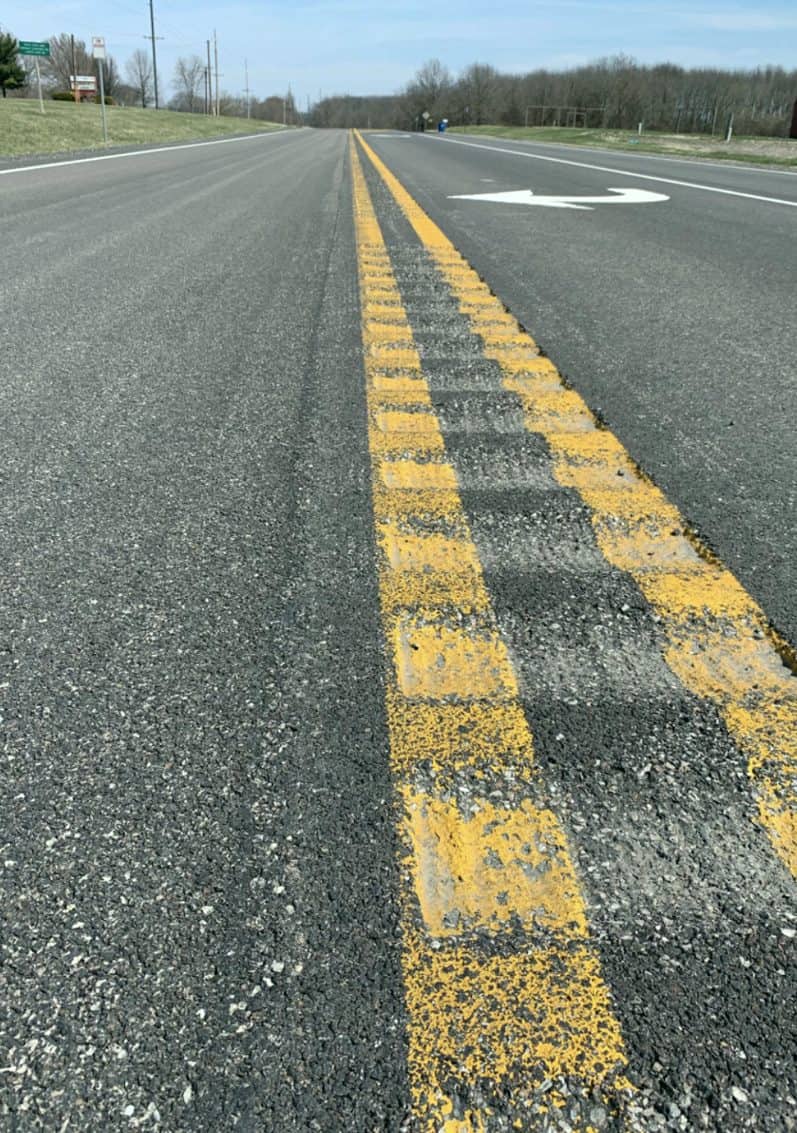
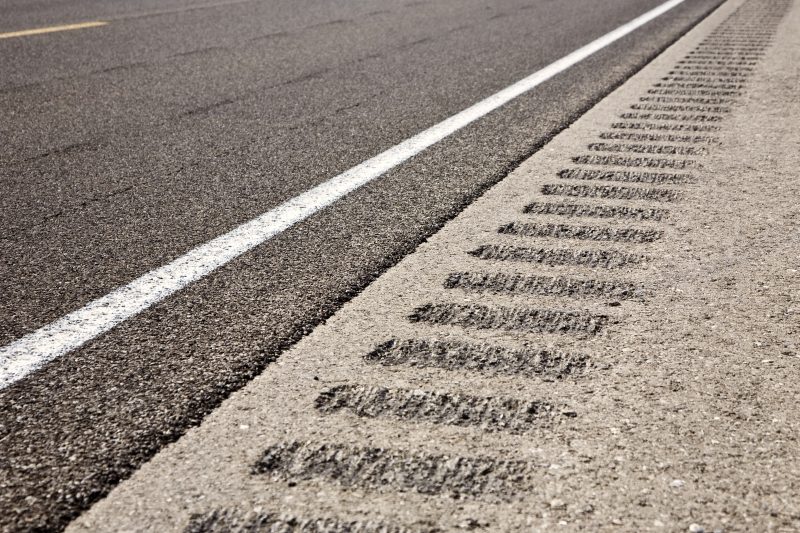
Audio-tactile profiled markings — rumble strips to everyone else — are shallow grooves or raised ribs that produce a loud hum and a physical shudder when a tyre crosses them. On the centreline, they target the deadliest crash type on the open road: the head-on, where a vehicle crosses into oncoming traffic. A driver who drifts over the centre while tired, distracted, or reaching for the stereo gets an unmistakable jolt of noise and vibration, usually in time to correct. Centreline rumble strips have gone in across long stretches of state highway precisely because they are cheap, retrofittable, and demonstrably cut cross-centreline crashes.
Edgeline Strips and the Run-Off
The same technology on the edgeline tackles the other classic open-road killer: the run-off-road crash. Fatigue, a microsleep, or a glance at the phone, and a vehicle wanders left toward the gravel, a ditch, or a power pole. Edgeline rumble strips catch that drift early. They are quietly one of the best-value interventions on the network — a few cents of milled seal standing in for a guardrail that would cost thousands per metre. For the long, monotonous rural highways where drivers are most likely to switch off, they are close to ideal.
The Noise Trade-Off
There is a reason rumble strips are not everywhere, and it is the noise. The same hum that wakes a drifting driver carries across paddocks and into bedrooms, and residents near a newly rumbled corner are not always grateful. Engineers manage this with gaps for cyclists and driveways, quieter profiles near houses, and careful placement — the dry reality behind the apparently simple act of grinding a groove in the road. It is a constant negotiation between the safety of the many on the road and the sleep of the few beside it.
Raising the Road: Crossings, Platforms and Humps
Raised Crossings and Platforms
A raised pedestrian crossing is exactly what it sounds like: a crossing built up to footpath level, so the road rises to meet the kerb rather than the pedestrian stepping down into it. The effect is twofold. The vehicle must slow to climb the ramp, and the person crossing stays at a constant height — more visible, and no longer dropping into a dip. Raised platforms extend the idea to whole intersections or side-road entrances. They are increasingly common outside schools and in town centres, where the mix of people and vehicles is densest and the cost of a mistake is a child rather than a dented bumper.
Humps, Cushions and Tables
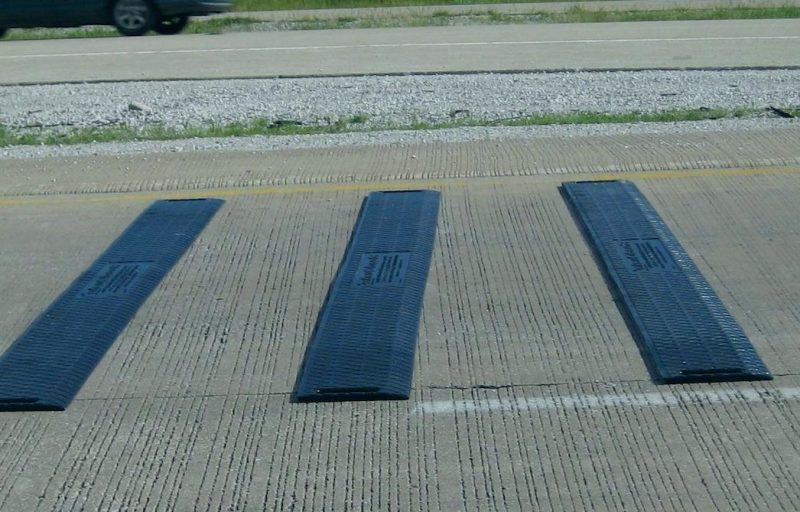
The humble speed hump and its relatives are the bluntest tools in the kit, and the most argued over. A full-width hump slows everything; a speed cushion is narrower, letting wide-axle fire appliances and buses straddle it while pinching cars; a speed table is a long, flat-topped hump, gentle at low speed but firm if you try to ignore it. They are effective and cheap, but they are also the device residents both demand and resent — wanted on your street, cursed on the way to work. Their placement is a genuine engineering judgement, not a punishment, however it feels at 7am.
Bending the Driver’s Path
Chicanes and Lateral Shifts
Not every calming device is vertical. A chicane introduces a deliberate horizontal kink — a staggered narrowing that forces vehicles to weave gently rather than barrel straight through. Because drivers instinctively slow when the path ahead bends, a well-designed chicane lowers speeds without a single bump. They suit residential streets and village approaches where a hump would be too jarring, and they double as informal give-way points. The trick is subtlety: too sharp and they infuriate, too gentle and they are simply ignored.
Refuge Islands and Buildouts
A pedestrian refuge island is a raised platform in the centre of the road that lets someone cross one lane at a time, dealing with one direction of traffic before facing the next. On a busy two-lane road it turns an intimidating dash into two manageable steps, and the narrowing it creates nudges drivers to slow as well. Kerb buildouts — extensions of the footpath into the parking lane — do similar work at corners, shortening the crossing distance and opening up sightlines. Neither is glamorous, but both quietly remove the situations in which pedestrian crashes happen.
Choosing the Right Tool, and Living With It
Matching the Device to the Problem
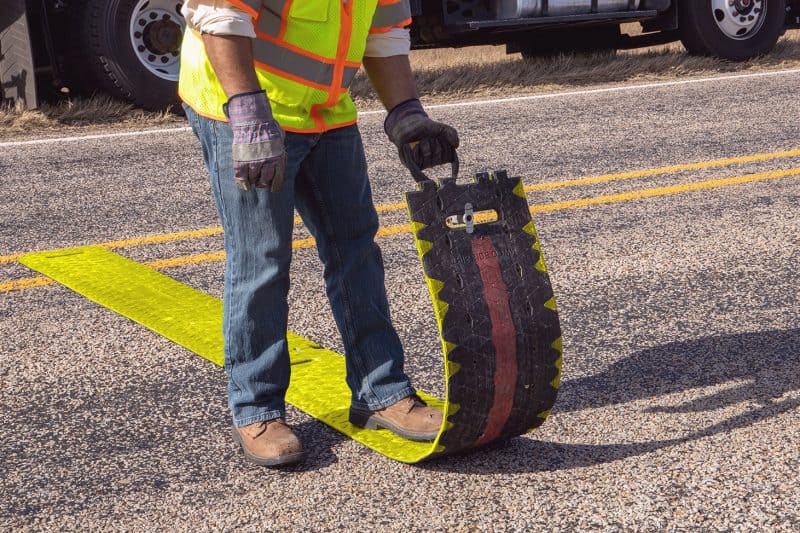
The art of traffic calming is diagnosis before treatment. A run-off-road problem on a rural highway calls for edgeline rumble strips, not a speed hump. A school gate with children spilling across the road wants a raised crossing, not a chicane. A rat-run where commuters shortcut through a suburb at speed might need a sequence of devices working together. Pick the wrong tool and you get the worst of both worlds: a feature that annoys everyone while fixing nothing. This is why the choice belongs with engineers and crash data rather than with whoever shouts loudest at the community meeting — though the shouting still happens. The international toolkit of traffic calming is wide, but the diagnosis is always local.
The Trade-Offs Communities Live With
Every calming device buys safety with something else. Humps slow ambulances as well as hoons. Rumble strips trade quiet nights for fewer head-ons. Chicanes and islands take road space and cost money a stretched maintenance budget has to find. Good engineering is honest about these trade-offs rather than pretending they do not exist, and good consultation explains them rather than springing a finished hump on a surprised street. The point is never to inconvenience drivers for its own sake. It is to build roads that quietly forgive the mistakes every one of us will eventually make.
None of these devices assumes a perfect driver, which is exactly why they work. A rumble strip, a raised crossing, a well-placed island — each takes a moment of human error and makes it survivable. They cost little, they ask something of every driver who meets them, and they are easy to resent on the morning commute. But the measure of a calmed road is the crash that never happens: the child who crosses safely, the tired driver nudged back into the lane. That is a fair trade.
3 Comments
The noise trade-off is real where I live — they put centreline strips in near a rural settlement and the night-time hum from trucks drifting over carries for hundreds of metres. Worth it for the safety, but the residents weren’t warned.
Edgeline strips saved me once on a foggy morning on the Plains — drifted, the hum woke me up, corrected before the gravel. Cheapest bit of road safety there is.
Mixed on the raised platforms. Great for pedestrians but the buses and trucks crawl over them and the whole street feels it. Self-explaining road, sure, but my fillings have opinions.