Why Potholes Form (and Why They Keep Coming Back)
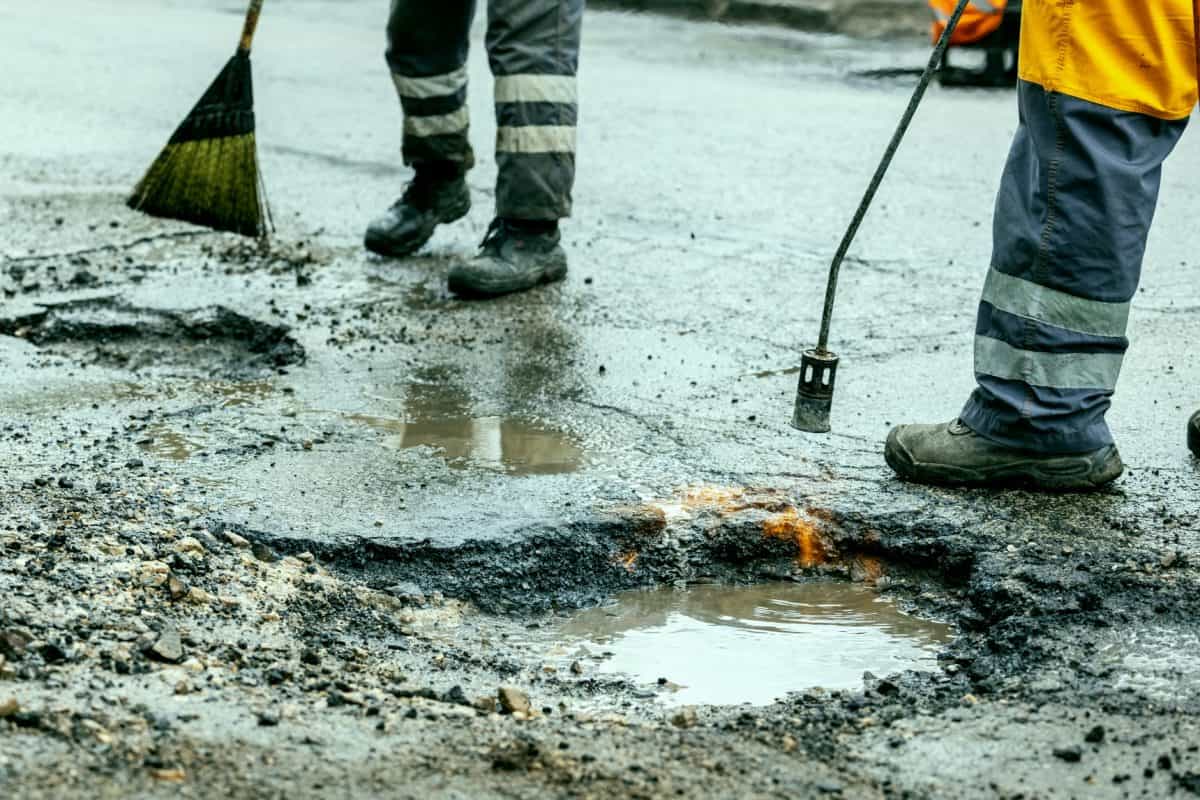
Few things unite New Zealand drivers like a good pothole grievance. But the hole that rattles your wheel is the last act of a failure that started long before, somewhere out of sight beneath the seal. Understanding how a pothole actually forms — and why the same ones keep coming back season after season — explains a lot about the state of the roads, the way they are repaired, and the funding arguments that never quite go away.
Anatomy of a Pothole
A Pothole Is a Symptom, Not a Cause
A pothole is the visible end of a failure that began out of sight, often months earlier. By the time the road surface gives way and a wheel-sized chunk lifts out, the structure beneath has already been losing the fight. That is the first thing worth understanding: the hole you swerve around is not the problem. It is the announcement that the problem has finally reached the surface. Treating the hole alone — which is most of what gets done in a busy maintenance season — is treating a symptom while the disease carries on underneath. Roads fail from the bottom up and from the inside out, and the pothole is simply the moment that failure becomes impossible to ignore.
Water Is the Number-One Enemy
Almost every pothole begins with water getting somewhere it should not be. A sound road sheds water off the surface and away through drainage; a tired one lets it seep through hairline cracks, failed joints, and the worn patches where the sealing chip has stripped away. Once water sits in the layers beneath the surface, it does two things. It weakens the unbound base course that gives the road its strength, turning a firm gravel layer into something closer to wet porridge. And under a passing wheel it is pressurised, scouring fine material out and enlarging the void. The mechanics are well documented in the engineering literature on pavement deterioration, but the short version is simple: keep water out and a road lasts; let it in and the countdown begins.
Traffic Does the Rest
Water weakens the structure, but traffic is what finishes the job. Every heavy vehicle that passes over a saturated, under-supported patch flexes the surface and pumps water and fines out of the weak spot. The unsupported seal cracks into a pattern engineers call crocodile or fatigue cracking, then those cracked pieces work loose, and one wet morning a wheel plucks the first chunk out. From there it accelerates: the exposed edges are vulnerable, the hole catches more water, and every vehicle widens it. A pothole that was a nuisance on Monday can be a tyre-wrecker by Friday on a busy freight route.
From Crack to Crater
It Starts at the Surface
On most of the New Zealand network the surface is a thin sprayed seal — bitumen and stone chip just a few millimetres thick — not a deep slab of asphalt. That seal is waterproofing first and a running surface second, and it ages. Sunlight oxidises the bitumen until it goes brittle, the chip strips under traffic, and fine cracks open. Each of those cracks is a doorway. A road that gets resealed on time keeps that doorway shut; a road whose reseal has been deferred a few years too long is, in effect, leaving the windows open in a storm.
When the Subgrade Gives Up
Below the seal sits the basecourse, and below that the subgrade — the natural ground the whole road is built on. The structure works only while every layer stays dry and well compacted, each spreading the load of a wheel over a wider area below. Let water into the basecourse and it loses stiffness; let it reach a soft subgrade and the road can deflect under load like a trampoline. Once that happens the surface cannot hold, no matter how good the seal was. This is why two potholes that look identical can need completely different fixes — one is a surface problem, the other goes all the way down.
New Zealand Does Wet, Not Freeze
Northern-hemisphere explanations of potholes lean heavily on the freeze-thaw cycle, where water in the road freezes, expands, and levers the surface apart. Most of New Zealand does not get enough hard frost for that to be the main driver — our version is the wet-dry cycle. Roads soak up water through a wet winter, lose strength while saturated, and take the heaviest damage in exactly the months when the network is least able to cope. The high-country roads of the central South Island are the exception, where genuine freeze-thaw does its northern-hemisphere work, but for most of the country it is simply rain, and lots of it.
Why New Zealand’s Potholes Got Worse
The Wet Years
The pothole surge that filled news bulletins and ratepayer Facebook groups was not imagined. A run of La Nina summers delivered repeated heavy rain, and the 2023 storms — the Auckland Anniversary floods and Cyclone Gabrielle — saturated whole regions and battered them with freight detours at the same time. Roads that were coping, just, were pushed past the point where their drainage and structure could keep up. When a network takes a year of rainfall worth of damage in a single sodden season, the potholes that follow are the bill arriving for weather that has already moved on.
The Maintenance Backlog
Weather lit the fire, but the kindling had been stacking up for years. Reseals and pavement renewals are the unglamorous preventive work that keeps water out, and they are also the easiest line to trim when budgets are tight — a road that is resealed a year or two late does not fail immediately, so the saving looks free until it is not. Across both the state highway and local road networks, the proportion of the network being renewed each year drifted below the rate needed to hold the line. The agencies that manage the state highway network have been candid that years of deferred renewals left the system more fragile when the weather turned. Deferred maintenance is not a saving. It is a loan against the road, and the interest is paid in potholes.
An Ageing Network Under Heavier Loads
Underneath the weather and the budgets sits a slower trend: the network is older and the traffic is heavier. Many roads were built for the vehicles and volumes of decades ago, not the larger, heavier trucks and the freight task they now carry. Heavier axle loads accelerate fatigue in a surface that was already near the end of its design life. None of this is a scandal — it is the predictable result of asking a long-lived asset to do more for longer. But it means the baseline rate of deterioration is rising even before a wet winter adds its share.
Patching, and Why It Often Does Not Last
The Throw-and-Go Patch
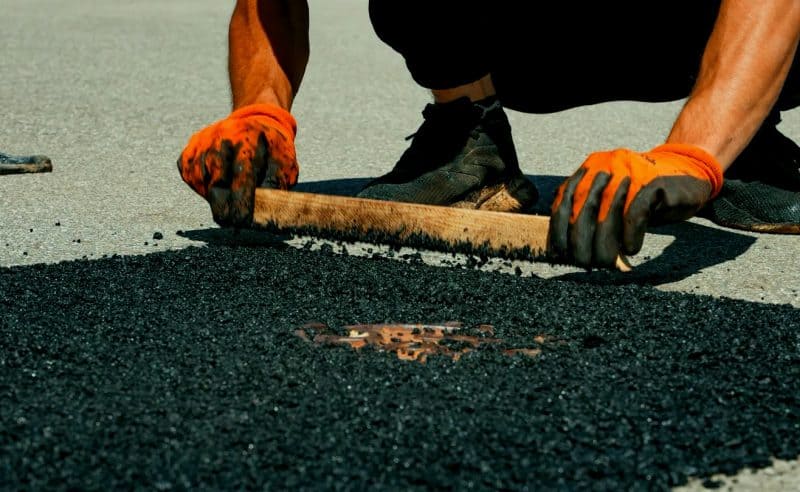
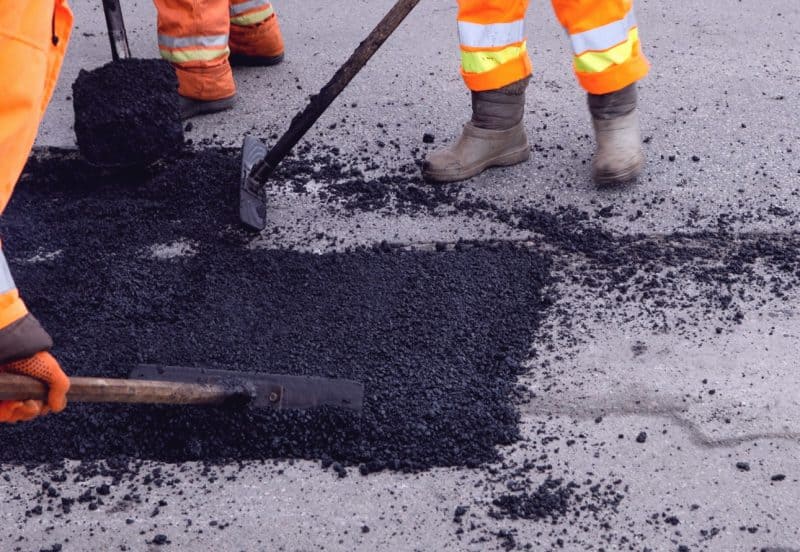
When a pothole is dangerous and the queue of them is long, crews reach for the fast fix: shovel in cold-mix asphalt, tamp it down, move to the next one. On a wet road, against ragged edges, with traffic running before it has properly bonded, that patch is doing well to last a season. It is not laziness or corner-cutting — it is triage. A crew with a fixed budget and a network full of holes has to choose between doing a few properly and making many safe, and safe-but-temporary usually wins when someone could put a wheel in the hole tomorrow.
Doing It Properly: Cut, Dry, Compact
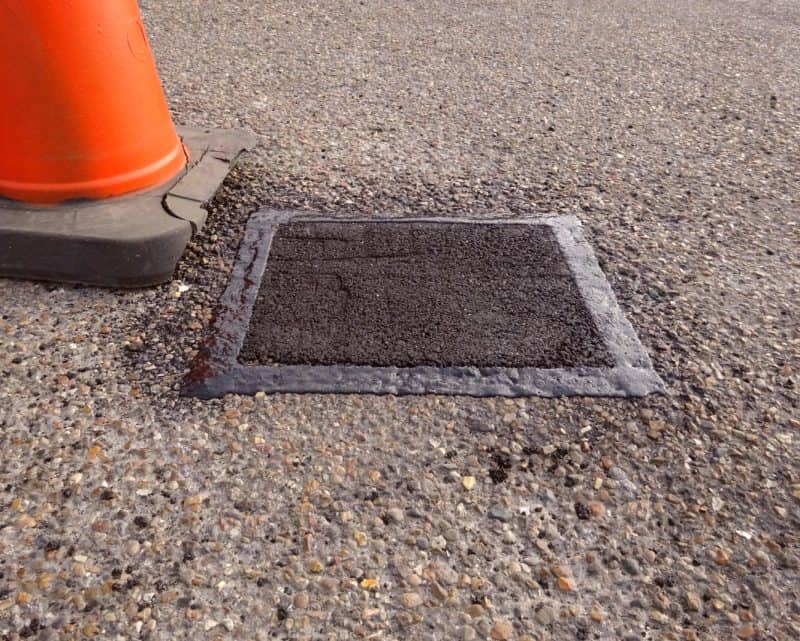
A durable repair is a different job. The failed material is cut out to a clean square, the hole is dried and the loose base removed, a tack coat helps the new material bond, and the patch is filled in layers and compacted hard so it matches the surrounding surface. Done well, it can last for years. It also takes more time, more plant, and a dry window of weather — all of which are in short supply during a pothole season. The gap between the patch we can afford in a hurry and the repair that would actually last is most of the story of why the same holes keep coming back.
Why the Same Pothole Returns
If a pothole formed because the basecourse below is saturated and unsupported, filling the surface changes nothing underneath. The water is still there, the structure is still soft, and the next wet spell reopens the wound in the same spot. Drivers who watch a crew patch the same stretch three winters running are not imagining it, and they are not necessarily watching incompetence. They are watching a surface treatment applied to a structural problem — the right tool for the wrong depth of failure.
Fixing the Cause, Not the Hole
Preventive Maintenance Beats Reactive
Every road agency knows the cheapest pothole is the one that never forms. Resealing on time, keeping drainage clear so water leaves the road instead of soaking into it, and renewing pavements before they fail are all far cheaper per kilometre than chasing failures after the fact. The economics are not subtle: preventive maintenance done on schedule can cost a fraction of the reactive repair and reconstruction that follows neglect. The catch is that preventive work is invisible when it succeeds — nobody thanks a council for the pothole that did not happen.
The Funding Question Nobody Escapes
Which lands the whole subject back where road problems usually land: money, and the political cycle that governs it. Preventive maintenance needs steady, boring, sustained funding across years, while budgets are set in shorter cycles and pressure always exists to defer the reseal and fund the thing that cuts a ribbon. Until renewal rates are funded to match the rate at which the network actually wears out, potholes will remain the recurring symptom of a structural under-investment. The hole in the road is, in the end, a fairly honest indicator of the gap between what the network needs and what it has been given.
Potholes are not a mystery, and they are rarely a story about lazy crews. They are water, traffic, and time finding the weak point in an ageing network, made worse by wet years and the quiet arithmetic of deferred maintenance. Fix the hole and you have treated a symptom; fix the drainage, the reseal cycle, and the funding behind them, and you start treating the cause. The road will tell you which one is happening.
4 Comments
Spot on about the throw-and-go patch. The crew tips cold mix into a wet hole, rolls it with a truck tyre, and it’s gone by the next downpour. Everyone blames the workers but they’re working to a budget that only pays for reactive, never the cut-and-dry-and-compact you describe.
Exactly this. Reactive patching tests as the most expensive way to maintain a road over its whole life, but it’s the only line in the budget that survives the cut. False economy, every single time.
The ‘heavier loads on an ageing network’ line is the real story. The pavements were designed decades ago for lighter trucks and a fraction of the volume. We run 50MAX units over them now and act surprised when they fail.
After the 2023 floods our local road was more patch than seal. Water really is the whole game — the moment the drainage blocked, the potholes multiplied within weeks.