Road Drainage: The Hidden System That Keeps Roads Alive
Ask anyone what wrecks a road and they will blame trucks, or the weather, or the council. The real answer is quieter than any of them: water. Every pothole, every slumped shoulder, every greasy slip on a hill road traces back to water that went where it should not have. Good roads are not just well surfaced — they are well drained, by a hidden system of shapes, channels and pipes most drivers never notice. Here is how that system works, and what happens when it stops.
Water: The Road’s Number-One Enemy
What Water Actually Does to a Road
A sealed road looks solid, but it is really a stack of layers — a thin waterproof skin over compacted aggregate over the natural ground, known as the subgrade. Those layers hold together because they are dry and tightly locked. Add water and everything changes. Moisture works its way into cracks, softens the unbound layers beneath the seal, and turns a firm foundation into something closer to wet cardboard. Once the base loses strength, the weight of passing traffic flexes the surface until it cracks, rashes and finally fails. Water does not wreck a road in one dramatic moment. It does the job slowly, every time it rains, in places no one can see until the surface gives way.
Why Drainage Comes Before the Seal
Engineers have a saying: the three most important things in road building are drainage, drainage and drainage. It sounds like a joke until you price the alternative. A surface renewal might last fifteen years on a well-drained road and barely three on a saturated one, because the new seal is only ever as good as the ground holding it up. That is why a competent maintenance crew chases water first — clearing the channel, unblocking the catchpit, digging out the choked ditch — before they think about laying fresh chip. Spending money on a new surface over a wet base is like repainting a house with rotten weatherboards. It looks better for a season, then the rot wins.
Shedding Water From the Surface
Camber and Crossfall: The Shape That Sheds Water
The first line of defence is the shape of the road itself. Camber is the gentle hump across a carriageway, higher in the centre and falling away to each edge, so rain runs off the surface instead of pooling on it. On a curve that becomes crossfall or superelevation) — the whole carriageway tilted toward the inside of the bend, which sheds water and helps vehicles hold the corner. The slope is subtle, usually two to three percent, enough to move water without throwing a driver around. Get it wrong and you get ponding, where a film of water sits on the surface long enough to cause skidding, spray and slow saturation of the seal. A road that has lost its shape through years of patching often drains badly long before it looks worn out.
Kerb, Channel and the Urban Edge
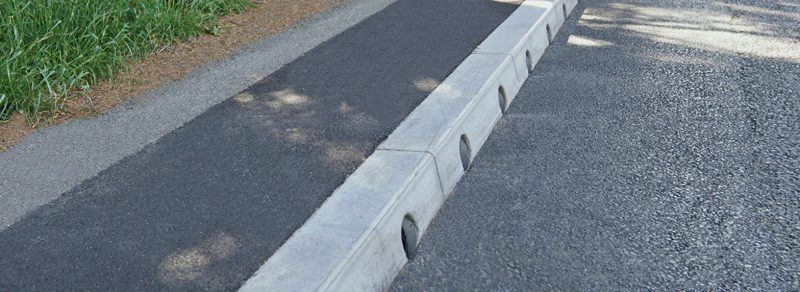
In town there is no grassy verge to soak up runoff, so the edge of the road does the work. The kerb and channel — the raised concrete lip and the gutter beside it — catches water shed off the camber and guides it along the road instead of letting it spread across footpaths and properties. It is unglamorous concrete, but it decides where the water goes. A cracked or sunken channel quietly ponds water against the seal edge, which is one of the most common places for a road to start breaking up. The kerb line also protects the road’s structural edge, stopping the unbound layers crumbling outward under traffic. When you see a gutter full of silt and leaves, you are looking at a drainage system that has stopped doing its job.
Catchpits and the Path to the Pipe
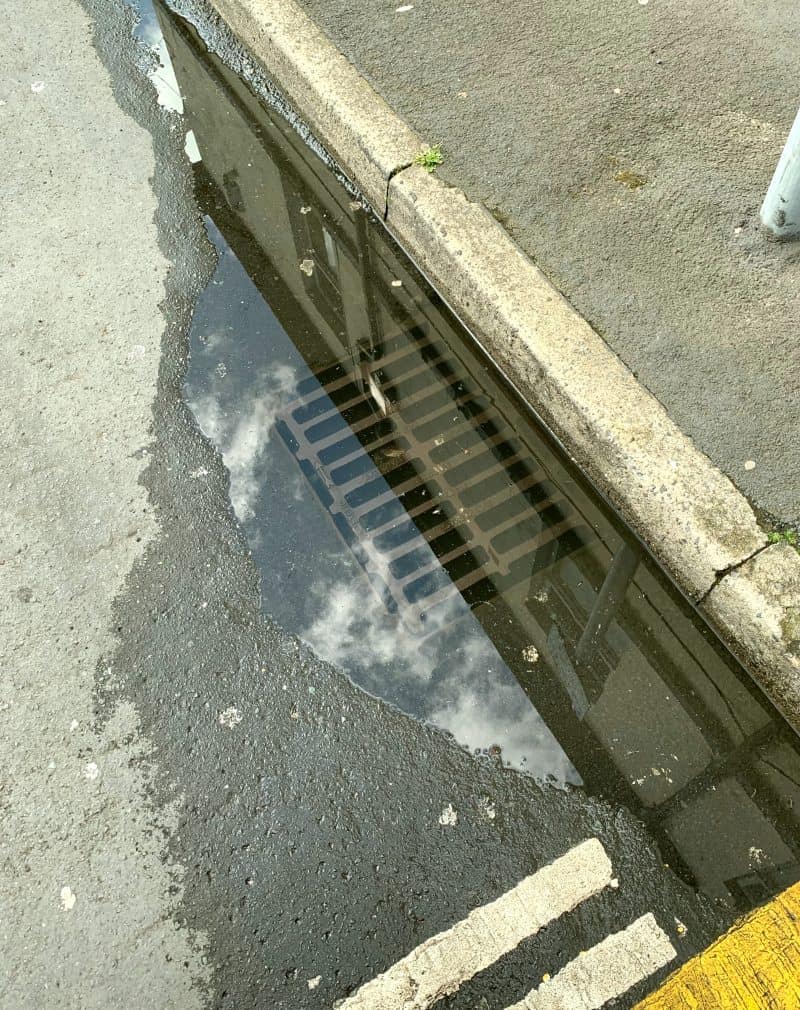
Water running along the channel has to leave the surface somewhere, and that somewhere is the catchpit — the grated inlet set into the gutter at regular intervals. Below the grate sits a sump that traps grit and debris before the water drops into the stormwater pipe network beneath the road. Catchpits are the link between the visible road and the buried system that carries runoff to a stream, soakhole or treatment device. They are also the first thing to clog. A single autumn of leaves can choke a catchpit, and a blocked one turns the gutter into a long, shallow pond at the next downpour. Councils run regular catchpit-cleaning rounds for exactly this reason, because the cheapest drainage maintenance there is is simply keeping the inlets clear.
Moving Water Across and Under the Road
Culverts: The Road’s Unseen Bridges
Where a road crosses a stream, a gully or a natural drainage line, the water has to reach the other side without flowing over the carriageway. That job belongs to the culvert — a pipe or box set under the road that carries the watercourse straight through the embankment. A culvert is effectively a small, buried bridge, and on a rural highway there may be hundreds of them. Size them too small, or let them silt up, and the water backs up behind the road in heavy rain until it overtops the surface or washes the whole embankment away. Many of the dramatic road closures after a big storm are not the seal failing at all — they are a culvert that could not pass the flow. Keeping culverts clear and correctly sized is one of the least visible and most important parts of looking after a network.
Swales, Ditches and Open Drains
On rural roads most drainage is open to the sky. The table drain or roadside ditch running alongside the carriageway collects runoff from the road and the land above it and carries it to the nearest culvert or watercourse. A swale is the gentler, vegetated version — a shallow grassed channel that slows water, lets some soak away and filters out sediment before it reaches a stream. These open drains are cheap, effective and easy to neglect. Grass grows, slips slump into them, the odd landowner fills them in for an extra metre of paddock, and slowly the road loses its ability to shed water. Re-forming roadside drains with a grader is routine maintenance, but on a long rural network with a tight budget it is exactly the kind of unseen work that gets deferred until a wet winter makes the consequences obvious.
The Water You Cannot See
Subsoil Drains and the Saturated Subgrade
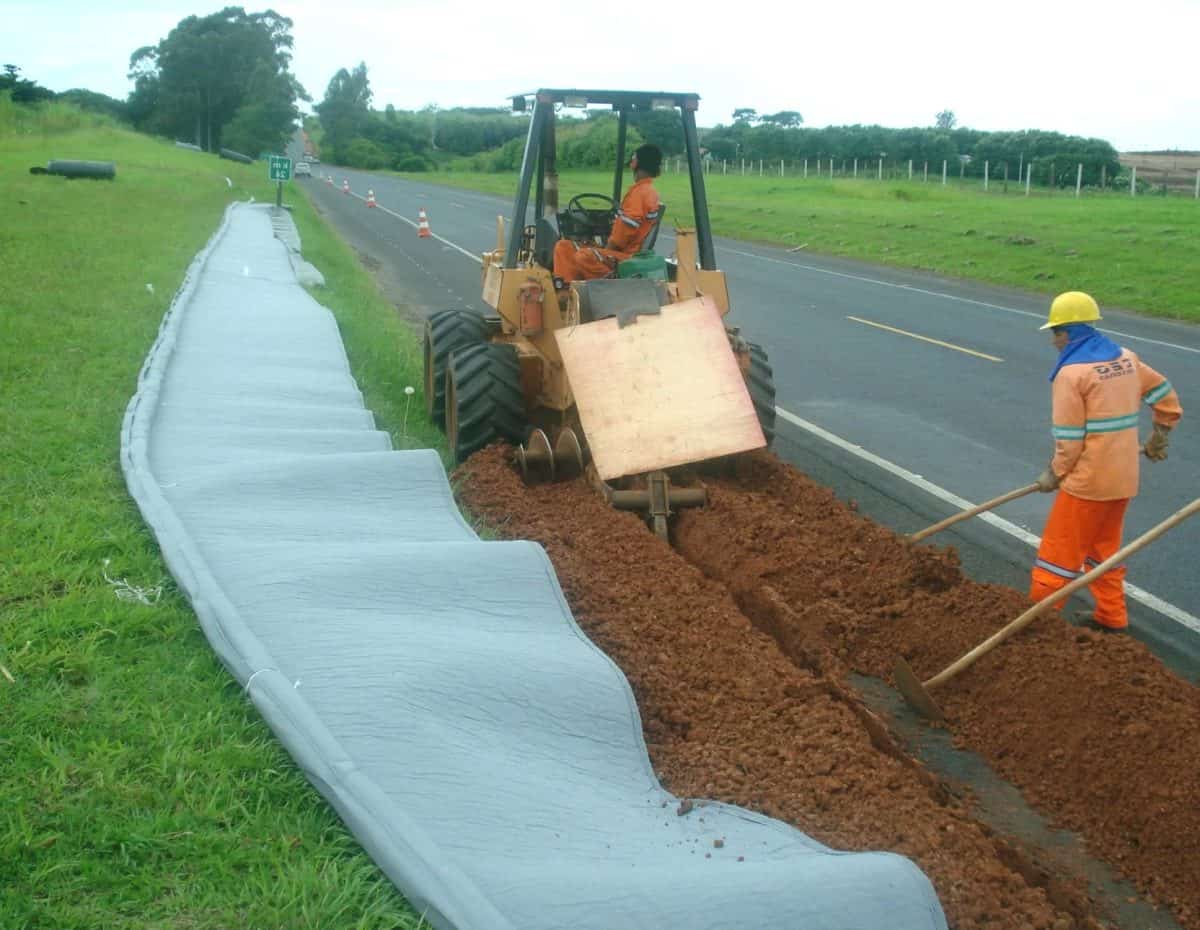
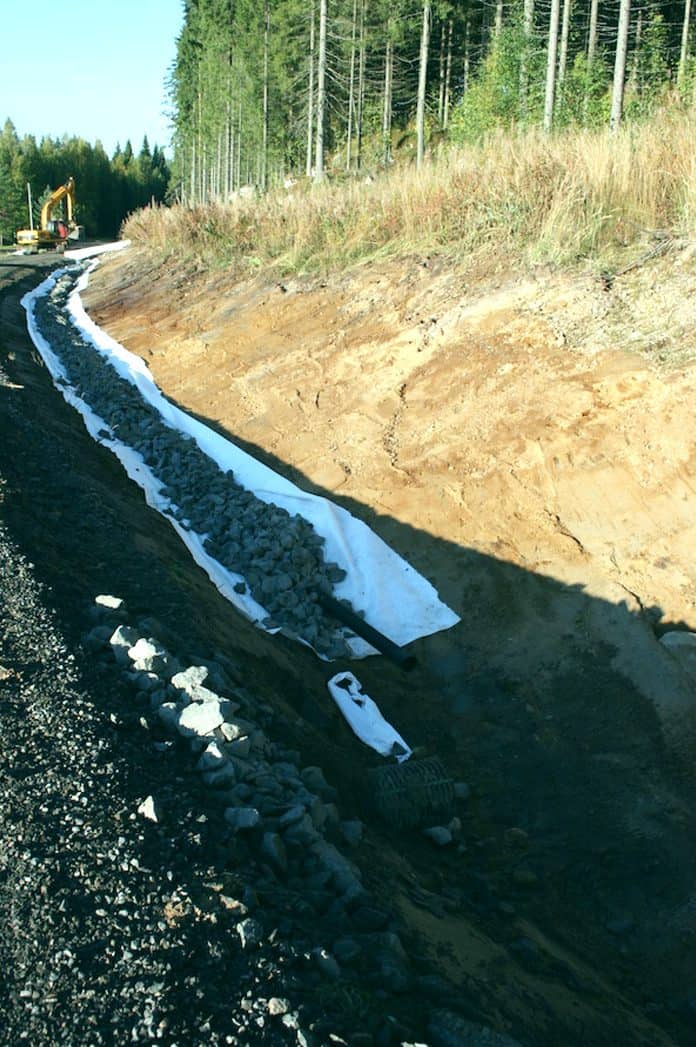
Not all the water threatening a road comes from above. Groundwater rises, springs seep, and rain that has soaked into the surrounding land moves sideways into the road foundation. Subsoil drains — perforated pipes wrapped in filter cloth and buried in gravel along the edge of the pavement — intercept that water and carry it away before it reaches the subgrade, the natural ground the whole road sits on. You cannot see them and you will never notice them working, which is precisely why they are forgotten. When a subsoil drain blocks, or was never installed in the first place, water builds up under the road with nowhere to go, and the trouble starts from the bottom up rather than the top down.
Why a Wet Subgrade Fails
A road gets its strength from the subgrade staying firm. Dry, compacted ground spreads the load of a truck across a wide area; saturated ground does not. When the subgrade goes soft, each axle pushes the pavement down a little and it springs back a little less each time — a process engineers call pumping, where water and fines are physically forced up through cracks under repeated loading. The surface starts to deform, then crack, then break into the familiar crocodile pattern that comes before a pothole. This is why two roads carrying the same traffic can age completely differently: the well-drained one keeps its foundation dry and firm, while the poorly drained one is quietly rotting from underneath long before anyone reaches for the patching truck.
When Drainage Fails
Blocked Drains, Potholes and Slips
When drainage fails the damage shows up in predictable ways. On flat ground it is potholes — water gets into the pavement, traffic pumps it through the layers, and a patch of surface disintegrates. On hill country it is slips and dropouts, where saturated ground above or below the road simply gives way and takes part of the carriageway with it. Both trace back to water that was not controlled: a blocked culvert, a silted channel, a subsoil drain that gave up years ago. The frustrating part for the people who use the road is that the failure looks sudden, but the cause has usually been building for seasons. A pothole is not really a surfacing problem — it is a drainage problem wearing a surfacing disguise.
The Maintenance Backlog Problem
Drainage maintenance is cheap, unglamorous and easy to defer, which is exactly why it tends to lose the budget fight. Clearing catchpits, grading table drains and flushing culverts produces nothing a ratepayer can photograph, so when funding is tight it slips down the list behind the visible work. The bill arrives later, and larger, as failed pavements and emergency repairs that cost many times what the prevention would have. New Zealand’s recent run of wet years exposed how much routine drainage work had quietly been skipped across the state highway network, and councils faced the same reckoning on local roads. The lesson is not complicated, and the sector has known it for a century: look after the water, and the road looks after itself.
None of this is glamorous. No one campaigns for a better catchpit or celebrates a freshly graded table drain. But the shape of the road, the channel at its edge, the culvert under the embankment and the perforated pipe buried in the shoulder are the difference between a road that lasts and one that fails. Look after the water, and the road mostly looks after itself. Let the water in, and every other cost on the network climbs with it.