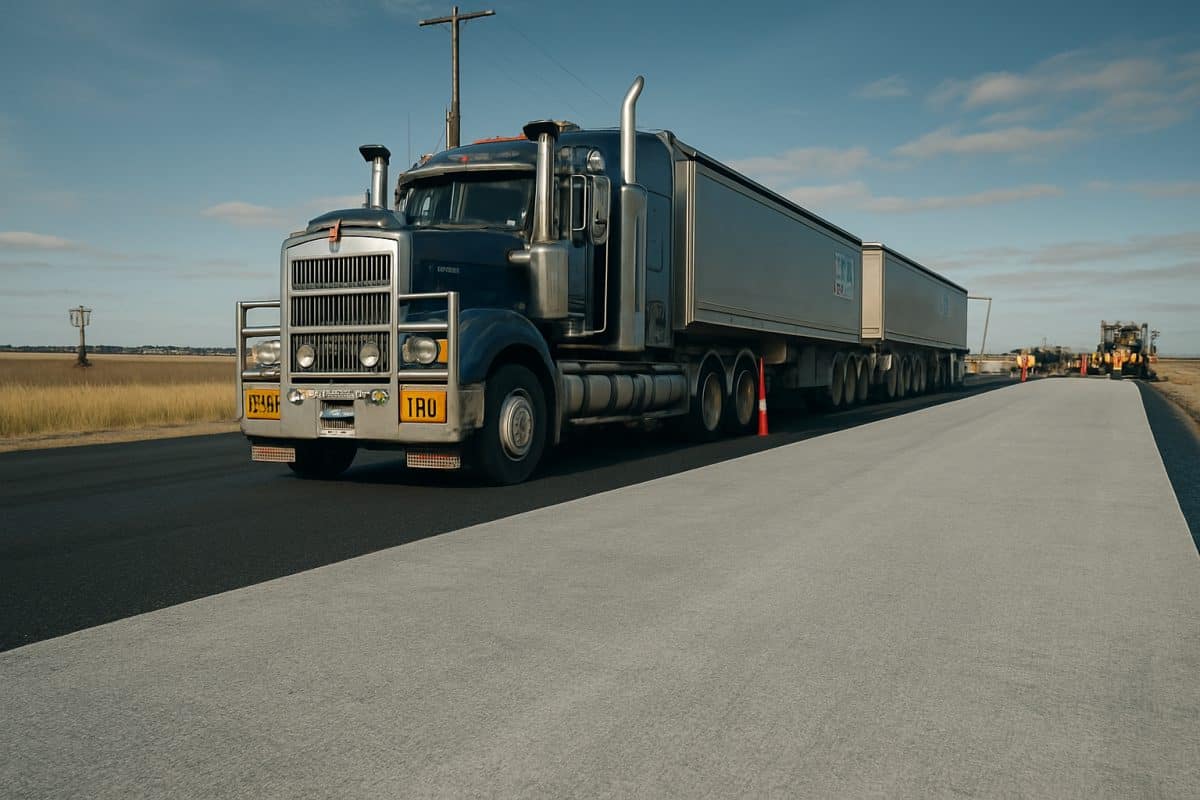
Chip Seal vs Asphalt: Why NZ Roads Are Sealed the Way They Are
Drive overseas and the roads often feel different underfoot — smoother, quieter, blacker. Come home and much of the New Zealand network wears a coarse grey surface that flicks the odd stone at your windscreen. That is chip seal, and it covers the great majority of our roads for reasons that have far more to do with cost, climate and a long thin network than with any lack of care. Here is how chip seal and asphalt differ, why each ends up where it does, and what that means for the road outside your gate.
Two Ways to Seal a Road
What Chip Seal Actually Is
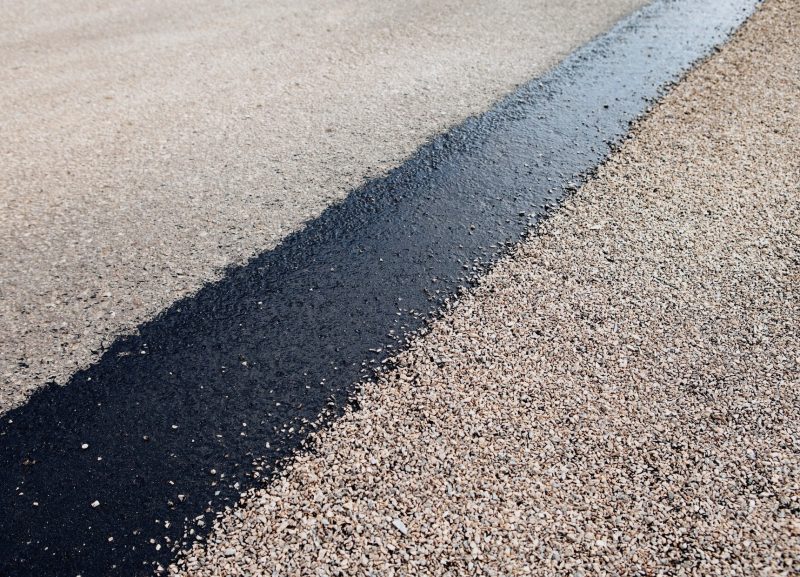
Chip seal — known formally as a sprayed seal, and to most Kiwis as the surface that flicks stones at your windscreen the week after it is laid — is the workhorse of the New Zealand road network. The method is almost disarmingly simple. A layer of hot bitumen, the black sticky binder refined from crude oil, is sprayed onto the road, and a layer of carefully graded stone chip is spread over it and rolled in. The bitumen glues the chip down and seals the surface against water; the chip gives your tyres the texture they actually grip. There is no thick structural slab here. A chip seal is often only as deep as the stone itself, a matter of millimetres. What sits beneath it — the compacted layers of basecourse and subgrade — is what carries the weight of the traffic. The seal’s job is narrower but vital: keep the water out and the grip up. For the long version of how the technique developed, the entry on chipseal is a reasonable primer.
What Asphalt (Hotmix) Is
Asphalt — often called hotmix, or asphaltic concrete on a worksite — works the other way around. Rather than spraying binder and dropping chip in two steps out on the road, the stone and bitumen are blended together in a plant, trucked out hot, and laid by a paving machine as a continuous mat before being rolled smooth. The result is the dense, dark, quiet surface most people picture when they imagine a proper road, and the one you glide across on an urban motorway. Because the aggregate is bound through the full depth of the layer rather than glued to the surface, asphalt is stronger, smoother and longer lasting under heavy traffic. It is also several times more expensive to produce and lay. That single trade-off, cost against performance, is the hinge on which almost every surfacing decision in the country turns — and the reason the two surfaces have ended up dividing the network between them.
Why Chip Seal Dominates the Network
The Cost Equation
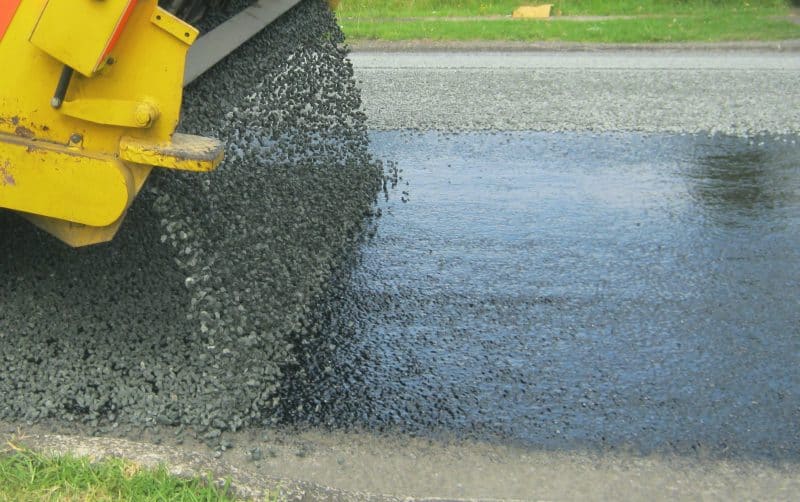
The blunt reason most New Zealand roads wear chip seal is that the country could not afford to do otherwise. Square metre for square metre, a sprayed seal costs a fraction of what an asphalt surface costs to lay, and the gap widens once you account for the structural depth asphalt needs to perform. When a road controlling authority is staring at thousands of kilometres of ageing surface and a maintenance budget that never stretches as far as the network needs, the cheaper option does not just win — it wins by a margin that makes the alternative look like a luxury. This is not a story of corners being cut. It is the rational allocation of a finite pot of money across an enormous asset, and the honest version of it is that resealing decisions are as much about funding as they are about engineering.
A Long, Thin, Low-Volume Network
New Zealand maintains roughly 94,000 kilometres of road for a population of around five million people, strung along two long, narrow islands. The great majority of that network carries light to moderate traffic — rural collectors, the road to the coast, the link between two small towns — and for those roads a chip seal is not a compromise but the right tool. Sprayed seals are ideally suited to low and moderate traffic volumes, where the surface mainly needs to be waterproof and grippy rather than able to withstand the relentless shearing of a city arterial. The state highway network alone runs to around 11,000 kilometres, and the way it is surfaced and maintained is set out across the technical guidance published by Waka Kotahi NZTA. Spend a little time with the numbers and the dominance of chip seal stops looking like neglect and starts looking like arithmetic.
Flexibility and Climate
There is an engineering case for chip seal too, quite apart from the money. New Zealand sits on young, restless geology — ground that slips, settles and shifts in ways that would crack a rigid surface. A thin sprayed seal is flexible. It moves with a road that is gently deforming beneath it, where a stiff asphalt slab might fracture. The maritime climate matters as well. Keeping water out of the pavement is the single most important thing a surface does in a country this wet, and a well-maintained chip seal is an effective waterproof skin. Add the relatively low temperatures across much of the country, which are kinder to bitumen than the baking heat that softens seals elsewhere, and the humble sprayed seal turns out to be genuinely well matched to the conditions it has to survive.
Where Asphalt Earns Its Place
High-Volume Urban Roads and Intersections
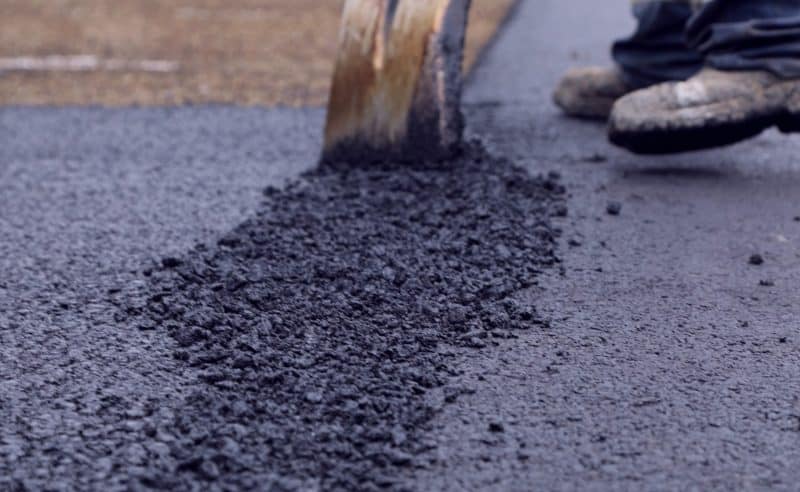
Chip seal meets its limit wherever traffic is heavy and the forces on the surface stop being simple downward weight. At intersections, roundabouts, bus stops and on steep grades, vehicles brake, turn and accelerate, and those twisting, shearing loads tear the chip off a sprayed seal faster than any amount of straight-line traffic. This is where asphalt earns its premium. Its bound, full-depth strength shrugs off the punishment that would strip a chip seal bare within a season. The same logic explains why busy urban arterials and motorways are almost always surfaced in asphalt: the traffic volumes are high enough that the longer life and greater durability of hotmix finally justify the cost. The surface follows the workload.
Noise, Smoothness and Skid Resistance
There are reasons beyond raw strength that asphalt shows up in cities. A dense, smooth asphalt surface is markedly quieter under tyres than a coarse chip seal, and specialist open-graded porous asphalt goes further, letting water drain down through the surface to cut spray and reduce the hiss of wet-weather traffic — a real quality-of-life gain for people living alongside a busy road. Smoothness matters to drivers too, and to the wear on their vehicles. And at the places where stopping distance is everything, such as the approaches to busy intersections, engineers can lay high-skid-resistance surfaces tuned specifically to grip. None of these benefits are free, which is why they are deployed where the traffic and the safety case justify them rather than spread thinly across the whole network.
The Lifecycle and Maintenance Reality
How Long a Seal Lasts
A chip seal is not laid once and forgotten. Depending on traffic, climate and how well the underlying pavement is holding up, a sprayed seal typically needs replacing on a cycle of roughly eight to fifteen years, and the rolling programme of resurfacing that keeps this happening is one of the largest recurring costs in road maintenance. Asphalt lasts longer, often fifteen to twenty-five years, which is part of how it earns back its higher upfront price on busy roads. The crucial point is that surfacing is a continuous obligation, not a one-off build. Every kilometre of sealed road carries a quiet, ongoing bill, and when resealing is deferred to balance a tight budget, the saving is borrowed rather than banked — the cost comes back, with interest, as the surface fails.
Why Chip Seal Looks Rough but Works
To an eye trained on the smooth asphalt of overseas highways, a fresh chip seal can look agricultural — loose stones, a coarse texture, the occasional chipped windscreen in the first weeks before the chip beds in under traffic. The loose-chip complaint is the most common gripe road crews hear, and it is a fair one, though sweeping and a sensible speed in the days after sealing manage most of it. But the rough appearance hides sound engineering. That coarse texture is doing useful work, channelling water away and giving tyres something to bite. A chip seal is not a cheap imitation of asphalt that the country settles for. It is a different tool, chosen on purpose, and on the roads where it belongs it does its job for a fraction of the cost of the alternative.
What This Means for the Roads You Drive
Reading Your Local Road
Once you know the trade-offs, you can read a road like a balance sheet. The smooth black asphalt on the main route through town and the coarse grey seal on the road out to the farms are not a story of one suburb being favoured over another — they are the surfacing logic playing out in front of you, matching the surface to the traffic and the budget. This is where regional equity quietly enters the picture. Rural and provincial roads, carrying fewer vehicles, are overwhelmingly chip sealed, which is appropriate, but it also means rural communities feel resurfacing decisions and maintenance backlogs more sharply than city drivers cushioned by long-lived asphalt. The surface under your tyres is, in the end, a visible record of decisions made about your road.
The Funding Pressure on Resurfacing
All of this sits on top of a maintenance funding system under genuine strain. Resurfacing competes with new building, with safety works and with emergency repairs after every storm, and when the resealing programme slips, the consequences are not abstract — a seal left too long lets water into the pavement, and water in the pavement is how a tidy road becomes a pothole-ridden one. Understanding chip seal and asphalt is really a way of understanding that wider pressure. The choice of surface is never just a technical call made by an engineer in isolation; it is shaped by how much money is available, how far it has to stretch, and which roads, in a long thin country, end up at the back of the queue.
Chip seal and asphalt are not better and worse versions of the same thing; they are different tools for different jobs. Asphalt buys smoothness, quiet and durability where heavy traffic justifies the price. Chip seal keeps a vast, lightly trafficked network waterproof and grippy for a fraction of the cost. Knowing which is which turns a stretch of road into a readable record of cost, climate and the constant pressure on the money that keeps it all together.
3 Comments
Good explainer. The bit ratepayers never accept is that a chip seal is maybe a fifth the cost per square metre of structural asphalt — on a network our length, with the traffic most rural roads carry, hotmix everywhere would bankrupt every council in the country. We seal to the traffic, not to what looks nice.
The flexibility point is underrated. On our clay subgrades that move with every wet-dry cycle, a thin flexible seal rides the movement where a rigid asphalt would crack up. Chip seal isn’t the cheap option so much as the right option for most of what we’ve got.
All very logical until a fresh chip seal throws a stone through your windscreen at 80. Wish the loose-chip warning signs stayed up longer than a day — two cracked screens on our road last summer.