
Debt Funding and PPPs in New Zealand Transport
New Zealand has one of the more conservative records on transport debt financing in the developed world — which is either a mark of fiscal prudence or evidence of chronic under-investment, depending on who you ask. The answer, like most things in transport policy, is complicated by the gap between what the numbers say and what the politics allows. This article works through the mechanics: how the National Land Transport Fund actually operates, what NZTA can and cannot borrow, what Transmission Gully taught us about public-private partnerships, and the conditions under which debt financing is the right tool rather than a convenient one.
How New Zealand Pays for Its Roads

The National Land Transport Fund Explained
New Zealand’s roading network is funded through one of the more elegantly designed fiscal mechanisms in the public sector: the National Land Transport Fund (NLTF). Every litre of petrol you buy contributes to it via the fuel excise duty. So does every kilometre travelled by heavy trucks, through the road user charges (RUC) system that applies to diesel and electric vehicles. The Crown tops it up with direct appropriations. That pooled revenue flows to Waka Kotahi NZTA, which allocates it across the six-yearly National Land Transport Programme (NLTP).
The current NLTP (2024-27) commits approximately $20 billion across those three years — the largest in the programme’s history. Of that, roughly half covers state highway improvements and new construction. The rest goes to local road maintenance funding assistance, public transport, walking and cycling, and road safety programmes. The funding assistance rates (FARs) that determine how much the Crown contributes to local road projects vary by region — poorer councils in Northland receive a higher assistance rate than Auckland Transport, which is expected to carry a greater share of its own costs.
This is the baseline. The NLTF is not a borrowing mechanism; it operates as a pooled revenue fund. The money comes in, the money goes out, and in principle the fund is self-sustaining. The reason debt funding and alternative financing arrangements enter the picture is that the fund, for all its scale, cannot always keep pace with the infrastructure the network needs.
Where Crown Lending Fits
Crown lending to transport sits slightly outside the NLTF model. Rather than the fund paying for a project upfront from pooled revenue, the Crown extends capital — typically through Treasury or via Crown Infrastructure Partners — which is then repaid over time from future NLTF allocations or, in some cases, from project-specific revenues. It is not borrowing in the commercial sense; the Crown is effectively lending to itself at sovereign rates, but the accounting treatment separates the capital advance from ongoing appropriations.
This structure has been used in cases where a project’s cost is too large to absorb within a single NLTP period without starving other programmes. The Auckland transport package negotiations in the mid-2010s and various conversations about Wellington’s infrastructure backlog have involved this kind of Crown lending arrangement. The mechanism lets the Crown accelerate construction without blowing out the annual transport appropriation, while keeping the financing cost well below what commercial debt would demand.
The Limits of the Annual Appropriation Model
The structural problem is straightforward: a motorway bridge built today should last 80 years. The NLTF that paid for it is an annual revenue fund. The people who will drive across that bridge in 2090 contribute nothing to its construction cost — it falls entirely on the generation of fuel buyers and truck operators who happened to be alive when it was built.
That intergenerational mismatch is not unique to transport. Most capital infrastructure faces the same tension. But it matters more in transport because the funding mechanism (fuel excise and RUC) is politically constrained — rates have not kept pace with the cost of construction or the scale of the network backlog — while the demands on the network keep growing. The Government Policy Statement on Land Transport sets the strategic priorities, but when the network needs a $3 billion motorway and the annual NLTP contribution to highways is a fraction of that, something has to give.
What gives, historically, is timing. Projects are deferred, split across multiple NLTP periods, or descoped. This is not irrational — it is conservative fiscal management. But it does create a genuine argument for financing alternatives when the deferral cost (accidents on the unsafe old road, freight delays, economic drag) exceeds the cost of borrowing to build sooner.
NZTA’s Borrowing Powers and How They Work
The Statutory Basis for Transport Borrowing
NZTA’s borrowing powers derive from the Land Transport Management Act 2003 (LTMA) and are constrained by it in ways that matter. The Act allows NZTA to borrow and to enter into financial arrangements, but those powers are subject to ministerial approval and Treasury oversight. NZTA cannot simply go to market for debt finance at its own discretion — any significant borrowing arrangement requires sign-off from the Minister of Transport and the Minister of Finance, and sits within the Crown’s overall fiscal strategy.
The statutory framework also ties borrowing to the NLTP — NZTA’s financial activities, including any debt servicing, must be consistent with the approved programme. This means that debt incurred for a transport project ultimately competes with new construction and maintenance for future NLTF allocations when the repayment falls due. The constraint is deliberate: it prevents transport borrowing from becoming a mechanism to bypass the investment prioritisation that the NLTP process provides.
In practice, NZTA’s direct borrowing record is limited. The agency’s preference has been to work within the NLTF or to structure alternative financing through PPP arrangements where the borrowing sits on the private sector’s balance sheet rather than the Crown’s.
Crown Infrastructure Partners and the Financing Chain
Crown Infrastructure Partners (CIP) is a Crown-owned entity that sits between Treasury and project-level financing. Established in its current form after the 2017 rebranding (the entity previously focused on ultrafast broadband deployment as Crown Fibre Holdings), CIP’s mandate has been progressively expanded to cover a broader range of infrastructure financing — including transport.
CIP’s role in the financing chain is to structure and manage Crown loans to infrastructure projects, applying commercial discipline to the due diligence and monitoring of lending that would otherwise sit awkwardly within Treasury’s remit. It charges sovereign borrowing rates (considerably cheaper than commercial debt) but applies rigorous project analysis: cash flow modelling, risk assessment, delivery capability review. The Crown gets efficient capital deployment; the project gets affordable long-term financing.
In the transport sector, CIP has been a relevant player in discussions around housing-related infrastructure that includes road access — though the direct transport PPP financing chain has more commonly run through the project’s private consortium arranging its own commercial debt, with NZTA’s availability payments providing the revenue certainty that makes that borrowing bankable.
Interest Rates, Risk, and Who Bears the Cost
The advantage of Crown borrowing over commercial debt is stark. When the New Zealand government borrows at sovereign rates — consistently among the lowest available to any entity in the economy — it pays materially less per dollar of debt than any private sector borrower. A transport PPP’s private consortium, by contrast, borrows at rates that reflect commercial risk: typically 100-300 basis points above Crown rates, depending on the project risk profile and the credit quality of the consortium members.
This spread is the central analytical question in any transport financing decision. Crown borrowing is cheaper in isolation. But Crown borrowing also keeps the risk on the Crown’s balance sheet — if a project goes over budget, underperforms, or requires remediation, the Crown absorbs that cost. Commercial debt financing, properly structured through a PPP, transfers some of that risk to the private sector in exchange for the higher cost of capital.
Whether the risk transfer is worth the extra cost depends almost entirely on what risks you are actually transferring and whether the private sector can manage them more efficiently than the Crown. For geotechnical risk on a complex hill motorway — think Transmission Gully — that is a genuine question. For routine road maintenance risk, the answer is much more likely to favour straightforward Crown procurement.
Public-Private Partnerships in New Zealand Transport
What a PPP Actually Is
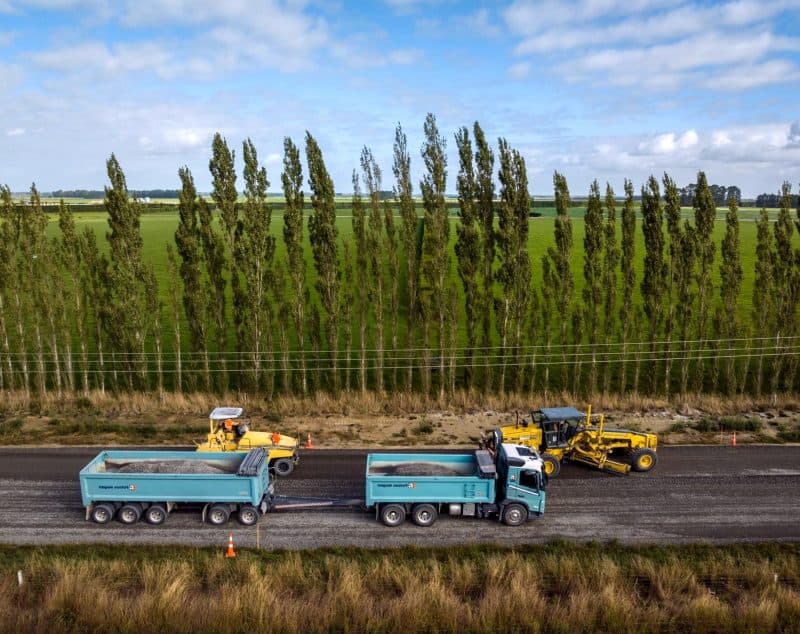
Strip away the policy language and a transport PPP has a clear mechanical structure. A private consortium — typically a joint venture of a construction company, an infrastructure operator, and a financing bank or fund — agrees to design, build, finance, operate, and maintain (DBFOM) a piece of infrastructure over a concession period, usually 25-35 years. In return, the Crown makes regular availability payments to the consortium: a contracted sum paid when the asset is open and performing to specified standards. The toll box never appears in the picture on the NZ model — payments come from the Crown, not drivers.
The risk transfer logic is this: under conventional Crown procurement, if the project runs over budget, the Crown pays. If the asset requires more maintenance than anticipated, the Crown pays. Under a PPP, those risks transfer to the consortium — they bear the cost overrun and the maintenance obligation, and their return depends on delivering within the agreed parameters. In exchange for taking on those risks, the consortium earns a margin above its financing cost.
It is worth being precise about what “risk transfer” means in practice. The consortium does not absorb unlimited risk — the contract defines risk allocation in considerable detail, and events outside the consortium’s reasonable control (legislative changes, pandemic lockdowns, earthquakes) are typically shared or returned to the Crown. A PPP is a carefully negotiated risk-sharing arrangement, not a blanket transfer of Crown liability.
Why New Zealand Has Used PPPs Sparingly
The arithmetic starts with scale. A PPP is expensive to procure — the legal costs, financial advisory fees, and the time of experienced contract managers on both sides of the table run into the tens of millions of dollars before a sod is turned. That transaction cost makes sense for a $1 billion+ project; for a $150 million road improvement, the procurement overhead could consume the entire value-for-money case. New Zealand’s transport project pipeline simply does not generate enough large projects to justify the permanent institutional infrastructure (specialist PPP units, deep contract management capability) that Australia and the UK have built.
NZ Treasury’s Value for Money framework — which any proposed PPP must clear — also creates a high bar. The Public Finance Act requires that alternative financing be demonstrably better value than conventional Crown procurement before it can proceed. Given Crown borrowing rates, that bar is not easy to clear unless the project has specific characteristics (complex risk, long operating phase, strong availability payment revenue certainty) that PPP structures handle better.
Add the political dimension: NZ’s toll road history (the Northern Gateway and the older Tauranga tolls) generated durable public resistance to user charges, and PPP availability payment models have sometimes been conflated with toll funding in public debate. The caution is partly rational and partly reputational management.
Australia and the UK by Comparison
Australia’s infrastructure trajectory explains why its PPP market looks so different from New Zealand’s. The state governments of New South Wales, Victoria, and Queensland were funding urban motorway expansions at a scale — $5-20 billion projects — where PPP transaction costs were manageable and private sector appetite was strong. The WestConnex in Sydney, the West Gate Tunnel in Melbourne, the Legacy Way in Brisbane: these are the kinds of projects that built Australia’s PPP market depth and the institutional capability — within Infrastructure Australia and within state treasuries — to structure and manage them.
The UK’s Private Finance Initiative (PFI) is a different story, and a useful cautionary one. PFI ran from the 1990s through the 2010s and produced hundreds of schools, hospitals, and infrastructure projects — many of which turned out to be far more expensive than conventional procurement would have been, once the long-term payment obligations were totalled. The collapse of Carillion in 2018, a major PFI contractor, crystallised concerns about the model: highly leveraged private consortia providing public services with thin equity buffers. The UK government effectively discontinued PFI in 2018.
New Zealand sits between these models. Too small for the Australian scale that makes PPPs efficient; too cautious (rightly) to replicate PFI’s aggressive financialisation. The question for NZ is not whether to adopt either model wholesale, but whether specific projects can clear the value-for-money bar on their own terms.
Transmission Gully: New Zealand’s PPP Exam Paper

The Deal Structure and What It Promised
Transmission Gully is the 27-kilometre motorway bypass that takes the Wellington northern corridor inland — over the Tararua Range foothills — to avoid the earthquake-vulnerable coastal cliffs of the Kapiti Coast. The road had been planned since the 1960s. It was finally funded as a DBFOM PPP because the project’s cost ($850 million in contract terms) and complexity exceeded what conventional NLTP procurement could comfortably accommodate in a single cycle.
The Wellington Gateway Partnership — a joint venture of CPB Contractors and HEB Construction — won the contract in 2014. The concession term is 25 years. Payment comes through availability payments: NZTA pays when the road is open and meeting performance standards. The consortium arranged its own commercial financing, secured by the contracted payment stream. On paper, the model was elegant: the Crown gets a motorway without a capital spike on the balance sheet; the consortium gets a contracted revenue stream for 25 years; and the risk of construction complexity and long-term maintenance sits with the private sector, not NZTA.
What made this specifically compelling for Treasury was the risk profile. Transmission Gully’s terrain — steep, geologically complex, prone to slips — meant that conventional construction risk was unusually high. Transferring that to a consortium with the engineering capability to manage it was a reasonable proposition.
Construction Delays, Disputes, and Cost Overruns
The terrain proved harder than modelled. Transmission Gully sits on a geological boundary that produced discovery after discovery during construction: unstable hillsides, unexpected rock profiles, drainage challenges that required redesign mid-construction. The original completion date of mid-2020 slipped as the scale of these complications became clear.
COVID-19 arrived in 2020 and compounded a project already running late. The pandemic lockdowns halted construction for months and disrupted the supply chains for materials and specialist equipment. The consortium sought relief from NZTA for pandemic-related delays — a legitimate claim under the force majeure provisions of the contract — which opened a broader dispute about which delays were COVID-attributable and which pre-dated the pandemic. NZTA and the Wellington Gateway Partnership spent considerable time and legal cost navigating that boundary.
The road opened in April 2022 — two years late. Post-opening inspections identified defects (surface water management issues, median barrier problems) that generated further disputes about responsibility and remediation costs. The PPP contract’s performance regime — which penalises the consortium financially when the road fails to meet agreed standards — created a structured mechanism for managing those defects, but the disputes about what triggered penalties and what constituted an acceptable remedy were protracted and expensive for both parties.
What the Project Delivered and What the Lessons Are
Transmission Gully is open and it works. Wellington’s northern corridor now has an inland alternative that is both faster and safer than the old coastal route in adverse weather. For a regional network that has long been identified as earthquake-vulnerable, that resilience gain is not trivial. The PPP structure did transfer meaningful financial risk: the consortium bore the cost of the construction delays from geotechnical causes, and the performance payment regime has held them accountable for post-opening defects in a way that conventional warranty periods in Crown procurement would not have.
But the project also produced three lessons that should inform any future NZ transport PPP.
First: geological risk has limits as a transferable commodity. The more extreme and unpredictable the ground conditions, the harder it is to price that risk accurately at contract signing — and the more likely both parties are to end up in dispute when reality diverges from the model. A PPP is not a mechanism for offloading unknowable risks; it is a mechanism for allocating manageable ones.
Second: transaction and management costs are real. NZTA committed significant internal and external advisory resources to procuring and managing the Transmission Gully PPP. Those costs do not appear in the headline contract price but are part of the total cost of the model. For an agency managing a broad programme, the opportunity cost of that capacity matters.
Third: the availability payment model performs well on what it was designed for. The Crown did not face a capital spike; the consortium bore financing risk; the performance regime produced accountability for defects. On its own structural terms, the PPP did what it promised. The complications were in execution, not design.
When Debt Funding Makes Sense
The Economic Case for Borrowing to Build
The strongest argument for transport debt financing is intergenerational equity. A motorway bridge built in 2025 and designed for an 80-year life will serve New Zealanders through to the 2100s. Financing its entire cost through the NLTF in the 2024-27 programme means today’s fuel buyers and truck operators pay for an asset that will be used predominantly by people not yet born. Debt financing, with repayment spread across decades, more closely matches who benefits with who pays.
There is also a counter-cyclical argument. Transport infrastructure is best built during economic downturns: construction costs are lower when private sector competition for resources is reduced, and public investment sustains employment during demand contractions. The counter-cyclical case for borrowing is well-established in economic literature — the question is always whether the project in question is one that would genuinely be built earlier, or whether the timing argument is post-hoc rationalisation of a project that would have happened anyway.
The core test is simple: does the return on the asset — measured in economic benefits, safety gains, and network resilience — exceed the cost of the debt service over the financing period? When the benefit-cost ratio is strong and the borrowing rate is low, the arithmetic often favours earlier delivery through debt. The difficulty is that transport benefit-cost analyses are optimism-prone, a point worth keeping in mind before the arithmetic looks too easy.
Projects That Are Good Candidates
Debt financing — whether Crown lending or a PPP structure — suits projects with specific characteristics. Large capital cost is necessary but not sufficient. The project also needs a long asset life (to justify spreading repayment), predictable and measurable demand (to underpin the revenue or benefit projections), and a clear mechanism through which the debt service can be met without crowding out the rest of the programme.
The Otira Viaduct replacement on State Highway 73 illustrates both sides. It is a critical resilience asset on the only alternative route between Canterbury and the West Coast. Construction cost would be substantial. The asset life would be long. But traffic volumes are low and the road serves a predominantly freight and emergency-resilience function rather than a high-demand commuter or freight corridor. The benefit-cost case is real but the revenue certainty is not there for a PPP structure — the availability payment would need to be Crown-funded entirely, which is simply Crown borrowing under another name.
By contrast, a major urban freight corridor with measurable productivity gains for a high-volume user base — the kind of project that underpinned Wellington’s Transmission Gully case or Auckland’s motorway extensions — is where the debt financing logic is most robust. Scale, demand certainty, and a defined user base all contribute to a bankable case.
The Fiscal Risks of Getting It Wrong
The failure mode for transport debt financing is well-documented internationally: optimism bias in the demand forecasts that underpin the business case. Bent Flyvbjerg’s research on infrastructure megaprojects — drawn from hundreds of examples across road, rail, and bridge construction — shows a consistent pattern of cost overruns and demand underestimates that persist regardless of project type or country. New Zealand is not immune.
When a project is financed on the basis of a benefit-cost ratio that does not materialise, the debt service must still be met. That cost comes from future NLTF allocations or Crown appropriations — which means less money for road maintenance, bridge renewals, and new investment in the programme. Fiscal risk from a single misallocated project is contained; fiscal risk from a programme of optimistically financed projects accumulates. The Public Finance Act’s requirements for rigorous cost-benefit analysis before any significant financing commitment are not bureaucratic overhead — they are a structural check on the bias toward building.
The honest answer to when debt funding makes sense is: when the evidence for demand and benefit is robust, when the asset life is long, when the Crown’s borrowing cost is low relative to the return, and when the risk allocation — between Crown and private sector — reflects where the competence to manage each risk actually sits. Those conditions are met more often than they are not in NZ transport. But they are also met less often than transport advocates would like to claim.
Debt funding is not a magic solution to NZ’s infrastructure gap, and PPPs are not a way to build roads without paying for them — the availability payments simply move the cost profile in time. What both mechanisms do, when properly applied, is allow the Crown to match the financing structure of long-lived assets more closely to the generation of users who will actually benefit from them. The question of when to apply them is an analytical one, not an ideological one. NZ’s record of caution has served it reasonably well; the risk now is not profligacy but excessive conservatism in the face of a growing network backlog.
2 Comments
Good breakdown of the Transmission Gully structure. One thing I’d add on the geological risk point — the site investigation work done at tender stage was actually quite extensive, but the ground still surprised the consortium once they got into the hillside cuts north of Stebbings Valley. The lesson isn’t that the risk was unforeseeable so much as that geotechnical models have inherent uncertainty that doesn’t transfer cleanly into a fixed-price contract. That’s a hard lesson to encode in the next PPP deed.
The intergenerational equity argument is real but I notice it tends to get used selectively — wheeled out when someone wants to justify borrowing for a project they like, quietly parked when the project is less popular. The Otira Viaduct example is a good one to include precisely because it shows the argument doesn’t always point in the same direction.